
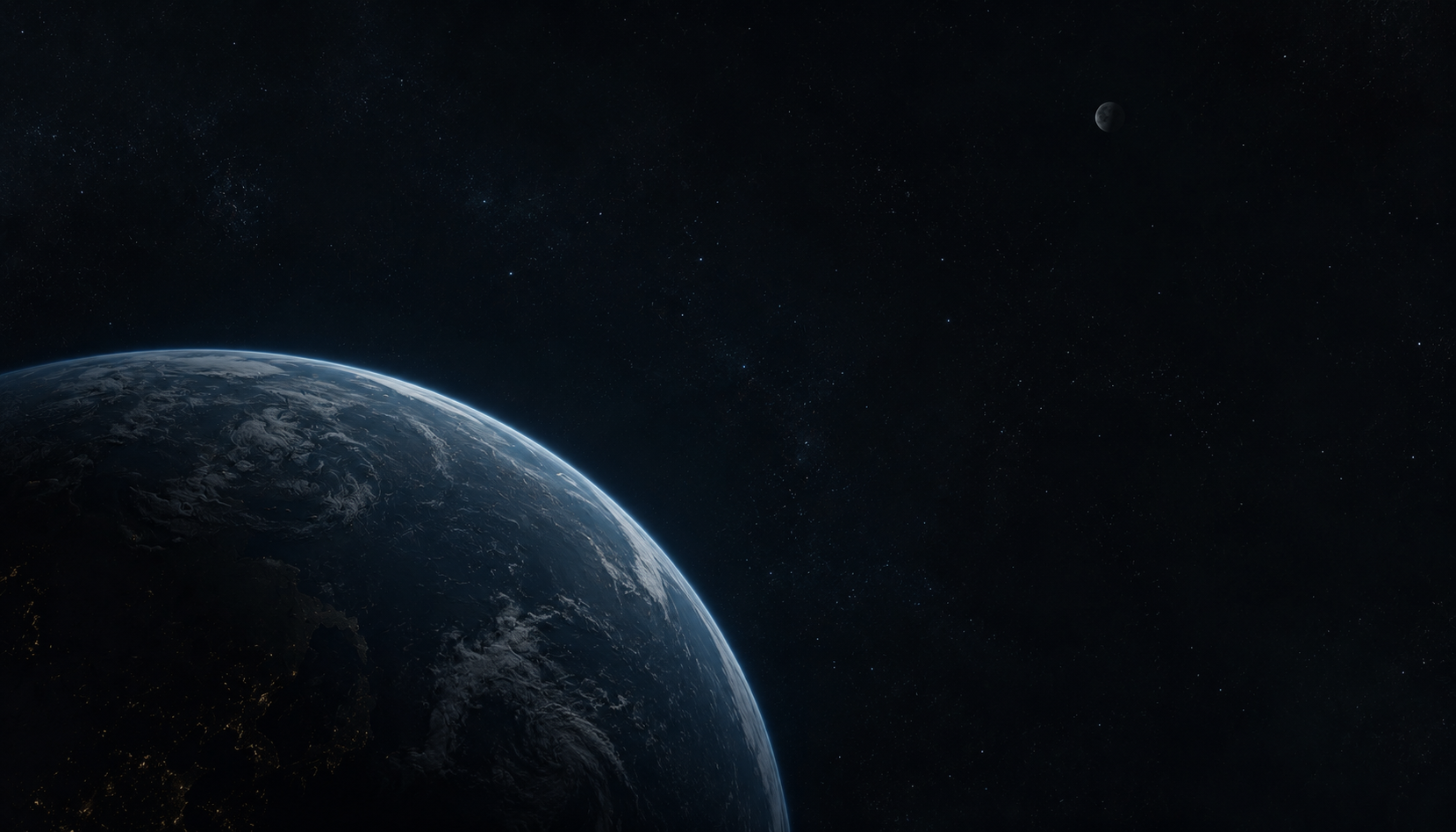
The moon drifting away from Earth is not a theory. It is happening right now, measurable to the centimetre — 3.8 centimetres per year, every year, confirmed by laser reflectors left on the lunar surface by Apollo astronauts. Silently, steadily, the Moon is leaving. And the world it is slowly abandoning would be almost unrecognisable without it.
Why Is the Moon Moving Away?
The culprit is tidal friction — one of the quietest forces in the solar system.
The Moon’s gravity pulls on Earth’s oceans, creating the tides we observe every day. But Earth rotates faster than the Moon orbits, so those tidal bulges are always slightly ahead of the Moon, gravitationally nudging it forward. That constant transfer of energy pushes the Moon into a slightly wider orbit each year. As the Moon gains orbital energy, it moves outward. As Earth loses rotational energy, its spin slows. Days on Earth are getting longer — by about 1.4 milliseconds every century.
Four billion years ago, a day on Earth lasted only around 6 hours. The Moon was three times closer, and the tides it generated were enormous. Everything about our planet’s relationship with its satellite has been changing since the moment the Moon formed — most likely from the debris of a massive planetary collision in the early chaos after the Big Bang.
The moon drifting away from Earth, in other words, is not a new development. It is the continuation of a process as old as the solar system itself.
What Earth Actually Loses
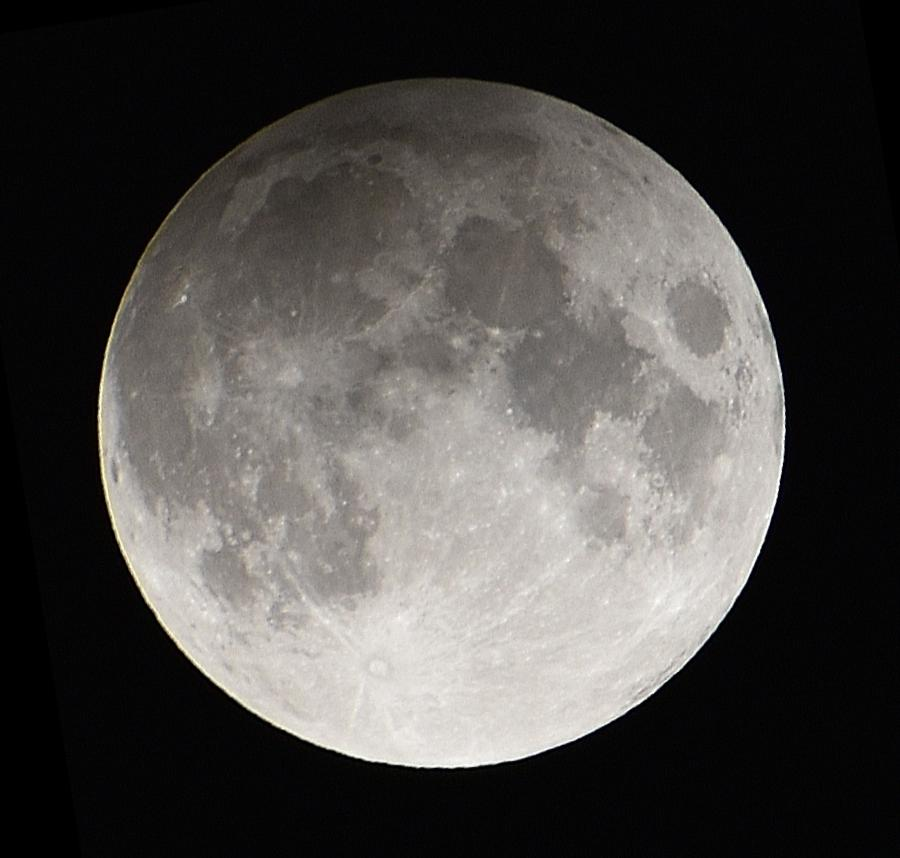
Most people think of the Moon as decoration — a light source, a tide-maker, something poets write about. The reality is far more structural.
Earth’s axial tilt, the 23.5-degree lean that gives us our seasons, is kept stable by the Moon’s gravitational influence. Without that stabilising pull, the tilt could wander chaotically over millions of years — swinging anywhere between near-zero and beyond 80 degrees. At high tilts, equatorial regions would plunge into months of darkness while polar zones baked under relentless sun. Mars, which has no large moon, has experienced exactly this kind of axial chaos — and its surface tells that story in geological scars.
The tides themselves would shrink to a fraction of what they are now. Ocean circulation patterns, which drive weather systems and distribute heat across the planet, would be redrawn. Coastal ecosystems built over hundreds of millions of years around tidal rhythms would face conditions they have never encountered. Life has survived extraordinary disruptions before — from the near-extinction triggered by the Toba eruption to complete atmospheric overhauls — but a moonless Earth would be a fundamentally different place to adapt to.
The moon drifting away from Earth is not just an astronomical footnote. It is a slow dismantling of the conditions that made complex life possible here.
The Timeline Reframes Everything
Here is the part that changes the whole picture: the Moon is not going to disappear.
At 3.8 centimetres per year, it would take roughly 50 billion years for the Moon to drift to a distance where its influence on Earth becomes negligible. The Sun will have expanded into a red giant and likely consumed the inner planets in about 5 billion years. The Moon will almost certainly still be orbiting Earth — slightly farther away, but present — when that happens.
Long before any of that, something else occurs. Earth’s rotation will slow until one face permanently points toward the Moon, just as the Moon already keeps one face locked toward us. At that point, the tidal energy exchange stops entirely, and the moon drifting away from Earth halts. The Moon doesn’t escape. It freezes — tidally locked — with half of Earth never seeing it again.
The scale of this process is the kind of thing that reframes ordinary intuitions about time. If falling into a black hole represents one extreme of how gravity warps experience, tidal locking represents the other — so gradual it is functionally invisible, yet so total it reshapes a planet.
What the Rings of This Relationship Record
There is something worth sitting with here.
The Moon’s recession is not silent — it leaves evidence. Ancient tidal rhythmites, layered sedimentary rocks formed by prehistoric tidal cycles, act like tree rings for the Earth-Moon relationship. Geologists have read them and confirmed the Moon was closer, days were shorter, and tides were higher. The universe keeps its own records of what space does to matter over time.
What those records show is a planet and its satellite in a slow gravitational waltz — always pulling at each other, always exchanging energy, always changing. The moon drifting away from Earth is less a departure than an evolution of that dance, playing out across timescales that make all of human civilisation look like a single frame in a very long film.
The Moon is leaving. Just not quickly enough for anyone to notice — and not completely enough to ever truly be gone. What it is doing, in the time between now and the death of the Sun, is changing what Earth is. Quietly, at 3.8 centimetres a year, it is writing the next chapter of a planet neither of us will be around to read.