
-
 3–4 minutes
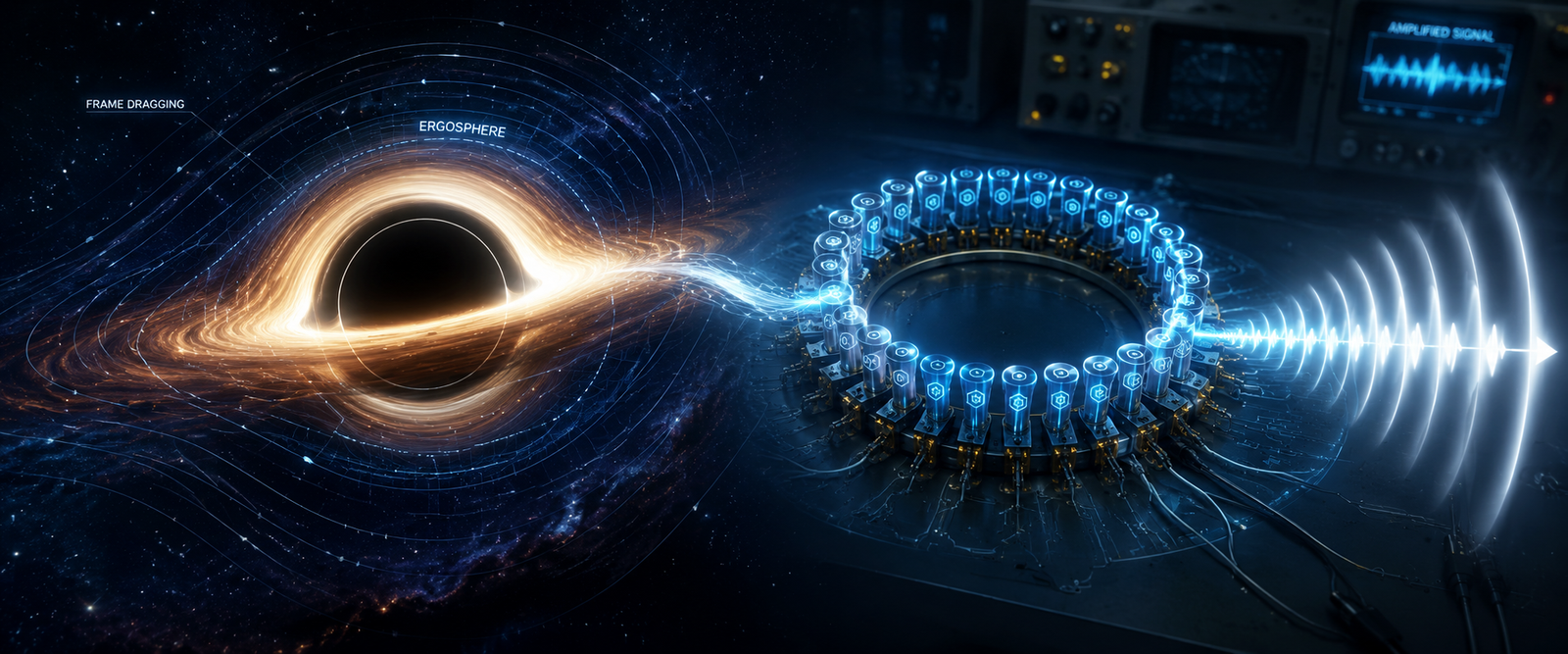
Extracting Energy From a Black Hole — Recreated in a Lab
A spinning black hole is, in theory, the most powerful battery in the universe. For fifty years, stealing its energy was pure mathematics. Then, in 2026, physicists in Manhattan recreated the trick on a lab bench — no black hole needed. Here’s how they pulled a cosmic secret down to Earth. Read more
-
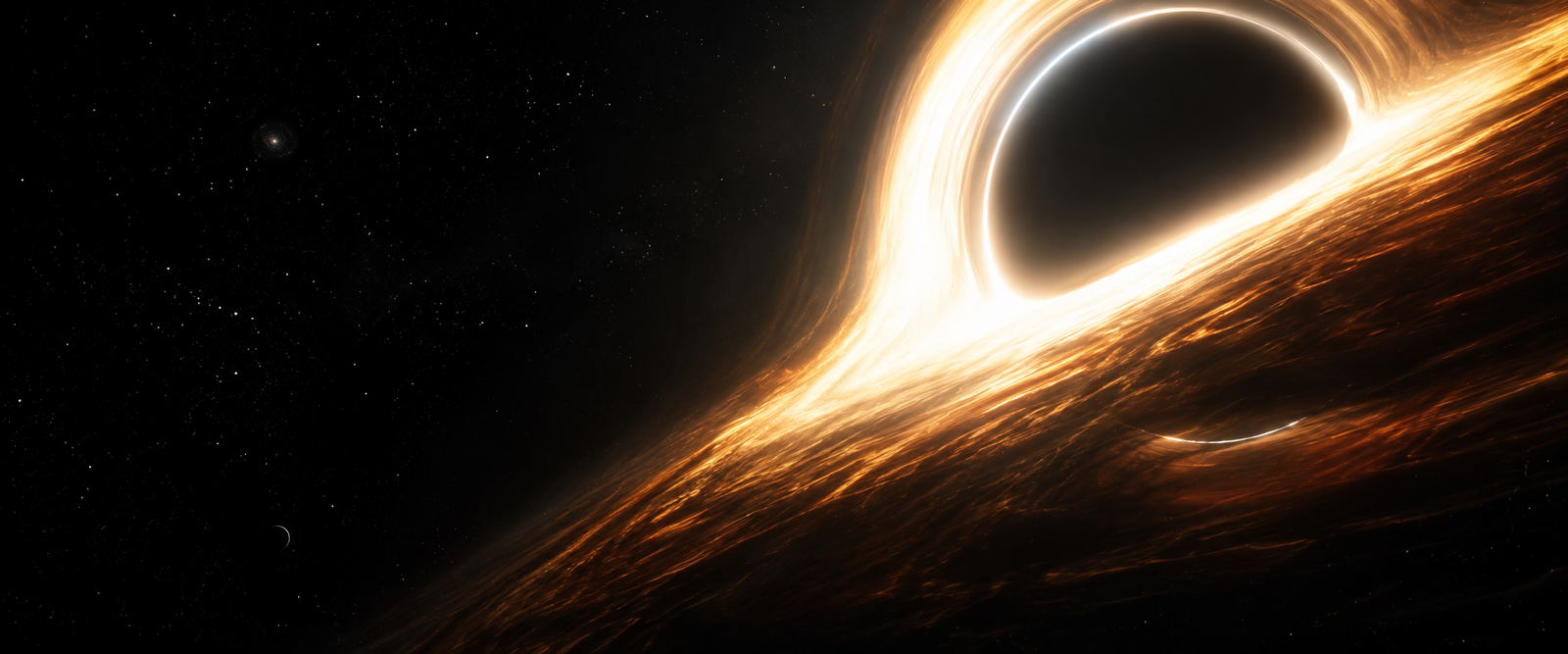
A Wandering Supermassive Black Hole Was Found Adrift in Space
Supermassive black holes are supposed to anchor the centres of galaxies. But astronomers just found one adrift 30,000 light-years out, with no galaxy around it — betrayed only when it shredded a passing star. Here’s how they caught this invisible giant, and what it reveals about how galaxies quietly grow by colliding. Read more
-
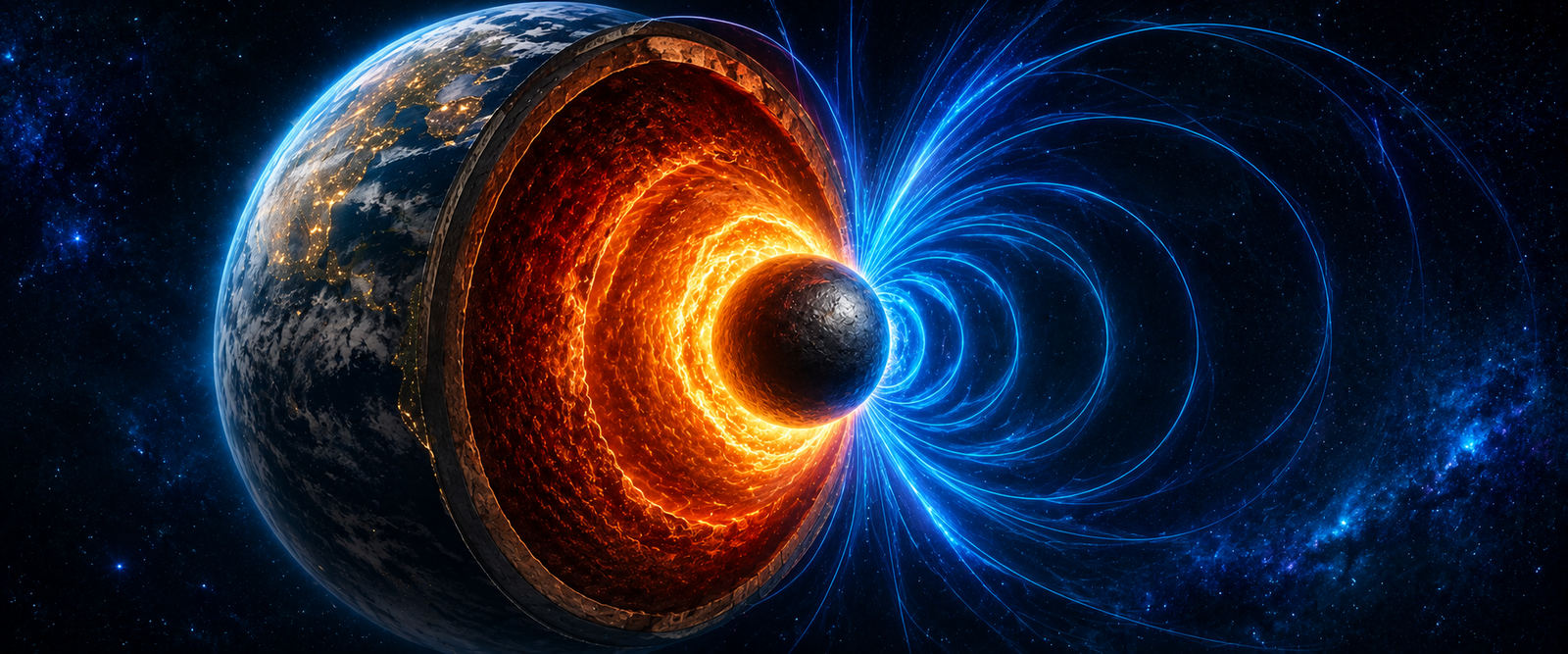
Why Earth’s Core Reversed Direction — And No One Knows Why
Five thousand kilometres down, a ball of solid iron the size of the Moon spins inside molten metal — and around 2009 it appears to have quietly flipped direction. Scientists can measure the reversal but can’t fully explain it. Here’s what we actually know about the planet’s strangest and most hidden mystery. Read more
-
 4–7 minutes
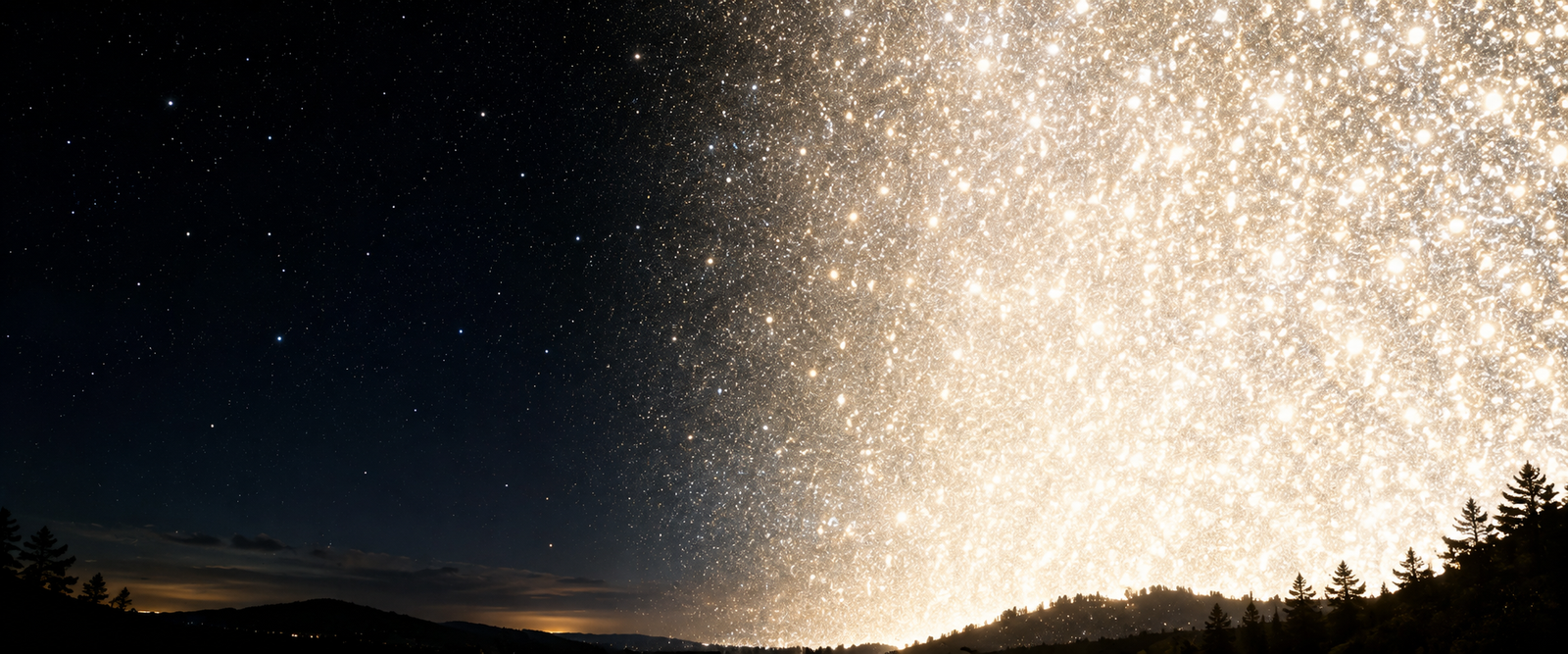
Olbers’ Paradox: Why the Night Sky Isn’t Bright
The night sky is mostly black — so obvious nobody questions it. But if the universe is infinite and full of endless stars, every point overhead should blaze as bright as the sun. It doesn’t. The reason the sky stays dark quietly reveals something enormous about the age of the cosmos itself. Read more
-
 5–8 minutes
The Boltzmann Brain Paradox: A Universe of Floating Minds
Right now, floating somewhere in deep space, there may be a fully formed brain that popped into existence by chance — with memories it never lived, convinced it’s a person reading this. The disturbing part isn’t that it’s possible. It’s that, by cold probability, it may be far more likely than you. Read more
-
The Great Attractor — Something Is Pulling Our Entire Galaxy and Nobody Knows What It Is
Something is dragging the Milky Way through space at 600 kilometres per second — and it isn’t the universe’s expansion. It’s a gravitational anomaly called the Great Attractor, 150 million light-years away, containing the mass of tens of thousands of galaxies. We can’t see it directly. Our own galaxy is blocking the view. Read more
-
 3–4 minutes
You Are Slightly Younger at Your Feet Than at Your Head
In 2010, physicists raised one atomic clock one foot above another — and they stopped agreeing. The higher clock ticked faster, accumulating 90 nanoseconds of extra time over a human lifetime. Your head has been aging slightly faster than your feet since the day you were born. Einstein said it would. It took a century… Read more
-
 3–5 minutes
Why the Sun’s Atmosphere Is Hotter Than Its Surface (And Nobody Knows Why)
The Sun’s surface sits at 5,500°C. Step away into its outer atmosphere and the temperature doesn’t drop — it explodes to 2 million degrees. This breaks thermodynamics as we know it. Why the sun’s corona is hotter than its surface has stumped scientists for over 80 years. Here’s how close we are to an answer. Read more
-
 8–11 minutes
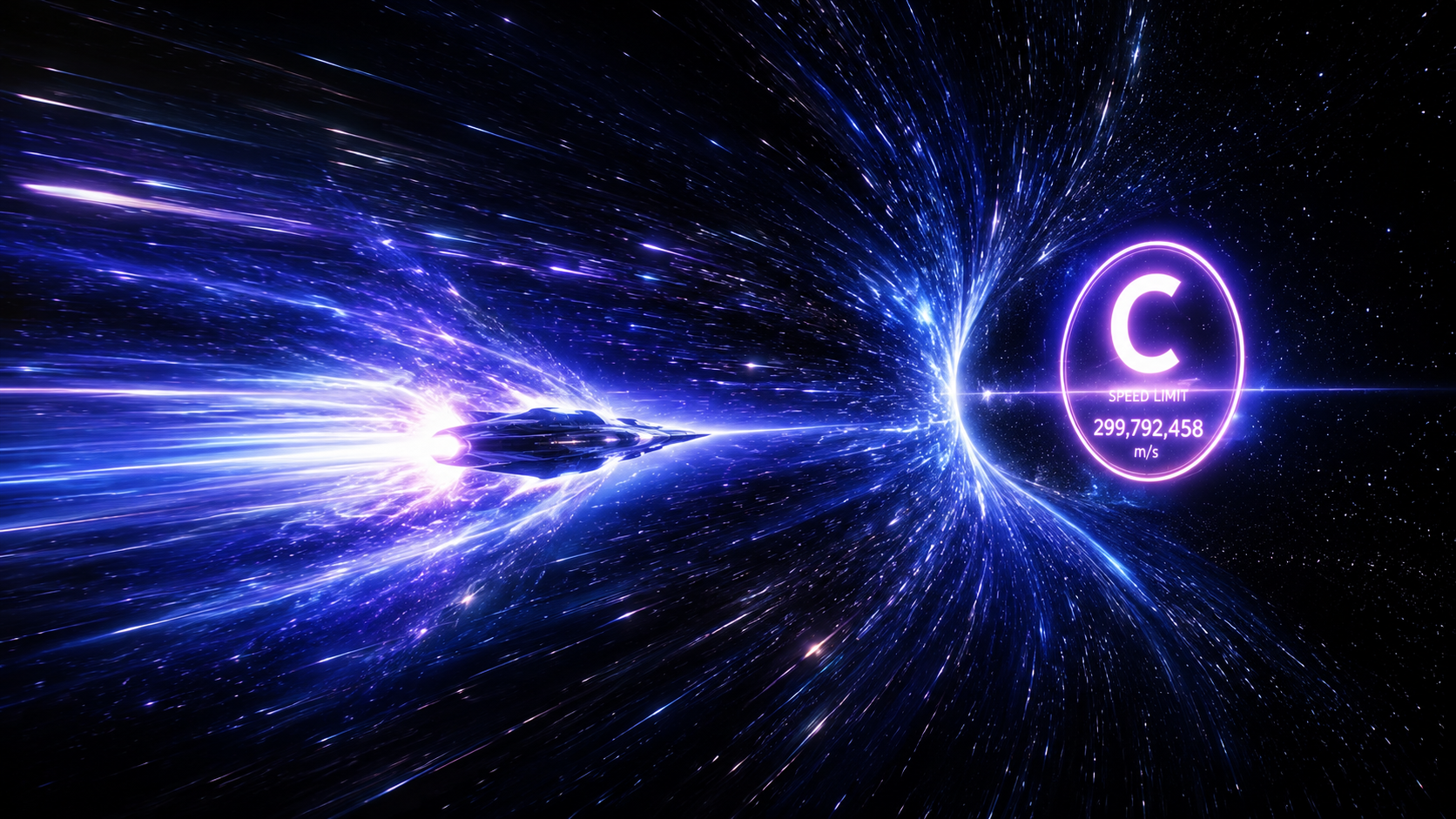
Why Nothing Can Travel Faster Than Light — And What Happens If You Try
The speed of light isn’t an arbitrary cosmic speed limit. It’s a consequence of how space and time are geometrically woven together — and the closer you push toward it, the stranger reality becomes. Time slows. Mass grows toward infinity. And the universe reveals a structure far odder than any sci-fi writer imagined. Read more
-
 7–11 minutes
Is Parallel Universe Real? Physics Behind Multiverse Theory
Is the parallel universe theory real, or just a fascinating idea from physics? This article breaks down the science behind the multiverse, exploring quantum mechanics, cosmic inflation, and the possibility that multiple realities may exist beyond our universe. Read more