
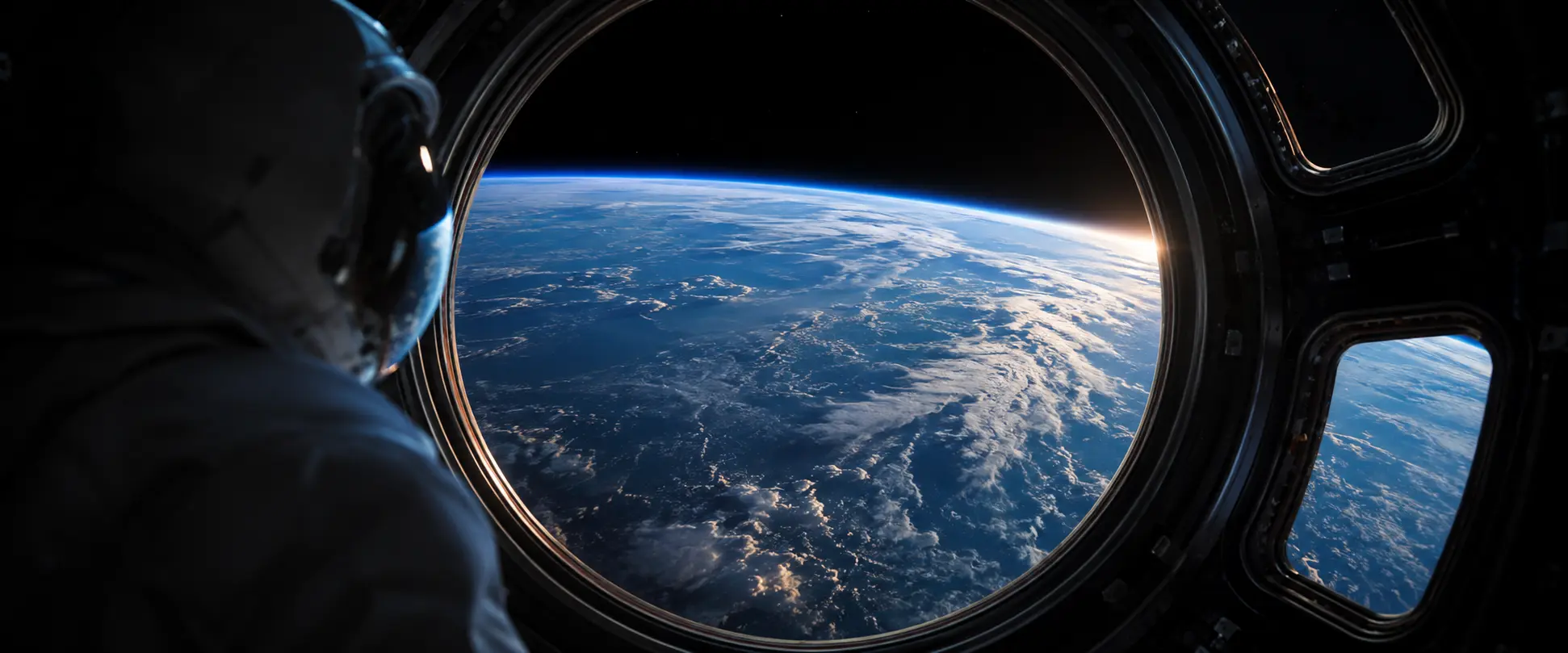
Something strange happens to people who leave the planet. Astronaut after astronaut has come back describing the same overwhelming shift — a sudden, almost spiritual rewiring of how they see life, borders, and their own place in the universe. It’s so consistent that it has a name: the Overview Effect. And the more you understand how seeing Earth from space changes you, the more you realise it isn’t really about space at all. It’s about finally seeing home for what it is.
By the end of this article, you’ll understand what that shift actually is, why it hits astronauts so hard and so predictably, the real psychology and neuroscience behind it, and why researchers now believe you might not need a rocket to feel a version of it yourself.
Table of Contents
What Is the Overview Effect?
The term was coined by writer Frank White in 1987, after he noticed that space travellers kept reaching for the same words. From orbit, Earth appears as a single, fragile blue sphere hanging in absolute blackness — no visible borders, no nations, no dividing lines. Just one glowing, living thing, wrapped in a paper-thin shell of atmosphere that suddenly looks alarmingly delicate.
The reaction tends to include a rush of awe, a deep sense of connection to all life, and a jarring realisation of how small and interconnected everything is — a shift in perspective as vast as the question at the heart of the search for alien life. Astronaut Edgar Mitchell famously described an overwhelming feeling of universal connectedness. Others have wept, gone silent, or said the moment quietly reorganised their entire sense of priorities. It’s less like sightseeing and more like a cognitive earthquake — and it’s one of the most profound things that can happen to the human body in space, even though nothing physical is actually touching them.
How Seeing Earth From Space Changes You So Deeply
So why does a single view rattle people at such a fundamental level? Part of the answer is scale. For your entire life, Earth is the unquestioned backdrop of everything — the ground, the horizon, the whole stage. Seeing it as a small object you could cover with your thumb violently breaks that assumption, forcing your brain to re-file “home” from everything to one tiny thing among countless others — a jolt of perspective that can quiet an overthinking, anxious mind faster than almost anything on the ground.
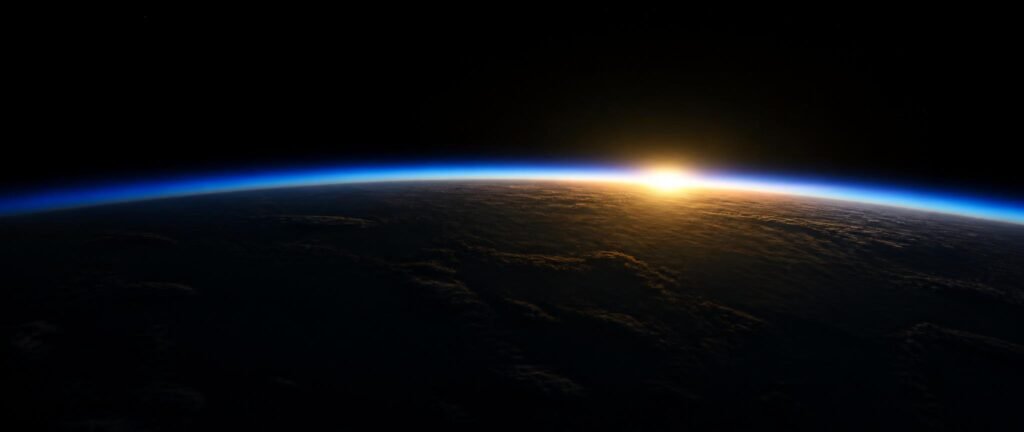
There’s also the confrontation with fragility — the kind that can even soften the way humans fear death. That thin blue line of atmosphere is the only thing separating every living creature from the vacuum of space, and seeing our fragile blue planet directly turns abstract knowledge into gut-level fear and tenderness at once. Psychologists link this to a state called awe — the emotion we feel when we meet something so vast it doesn’t fit our mental frameworks. That sense of awe shrinks the ego, dissolves the boundary between self and world, and makes petty concerns feel absurd.
The Neuroscience Behind the Shift
This isn’t just poetic language — there are real brain mechanics behind how seeing Earth from space changes you. Intense awe appears to quiet the brain’s default mode network, the system that maintains your constant sense of “me,” of being a separate self narrating your own life. When that network goes quiet, the rigid line between you and the world blurs, producing that reported sense of unity and boundlessness.
It’s the same neurological territory researchers see in deep meditation. The trigger is different, but the destination — a temporary collapse of the ordinary, walled-off self — looks remarkably alike. Seeing the whole Earth at once may be one of the most reliable ways ever found to switch that self-centred narration off.
Can You Feel It Without Leaving Earth?
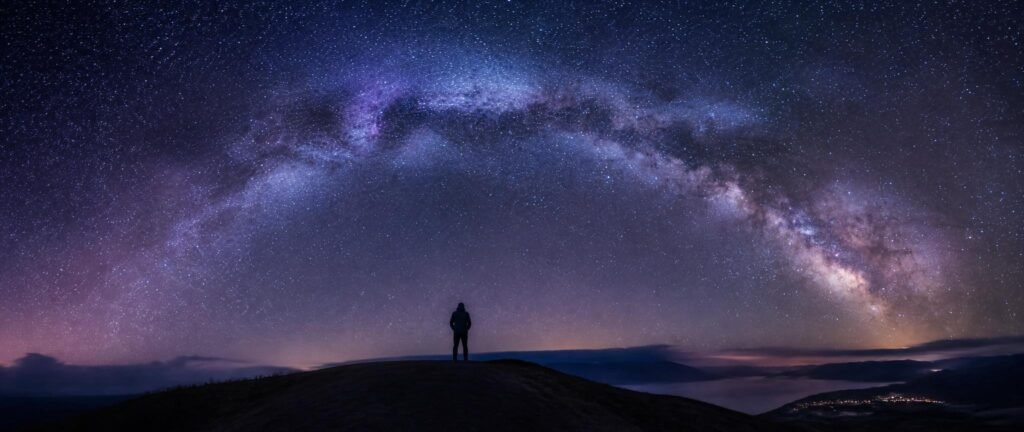
Here’s the hopeful part: you almost certainly don’t need to be an astronaut. While the full-strength effect belongs to the few hundred humans who’ve reached orbit, researchers studying awe have found that smaller, grounded versions are available to everyone. Standing under a sky thick with stars, gazing across a vast canyon, or watching a total eclipse can all trigger that same ego-shrinking, perspective-widening rush.
Virtual reality simulations of the orbital view are now being tested to reproduce the effect deliberately, and early results are promising. The lesson underneath how seeing Earth from space changes you is quietly available to all of us: deliberately seeking out things far bigger than yourself is one of the most powerful ways to reset a stressed, tunnel-visioned mind — a reminder that, like a lone planet in the dark, we are more fragile, more connected, and more extraordinary than daily life ever lets us feel.