
Your immune system is one of the most sophisticated killing machines in the known universe. Every single day, it hunts down and destroys abnormal cells before they can multiply — cells that, left unchecked, would become cancer. It does this quietly, efficiently, and without your awareness. Most of the time.
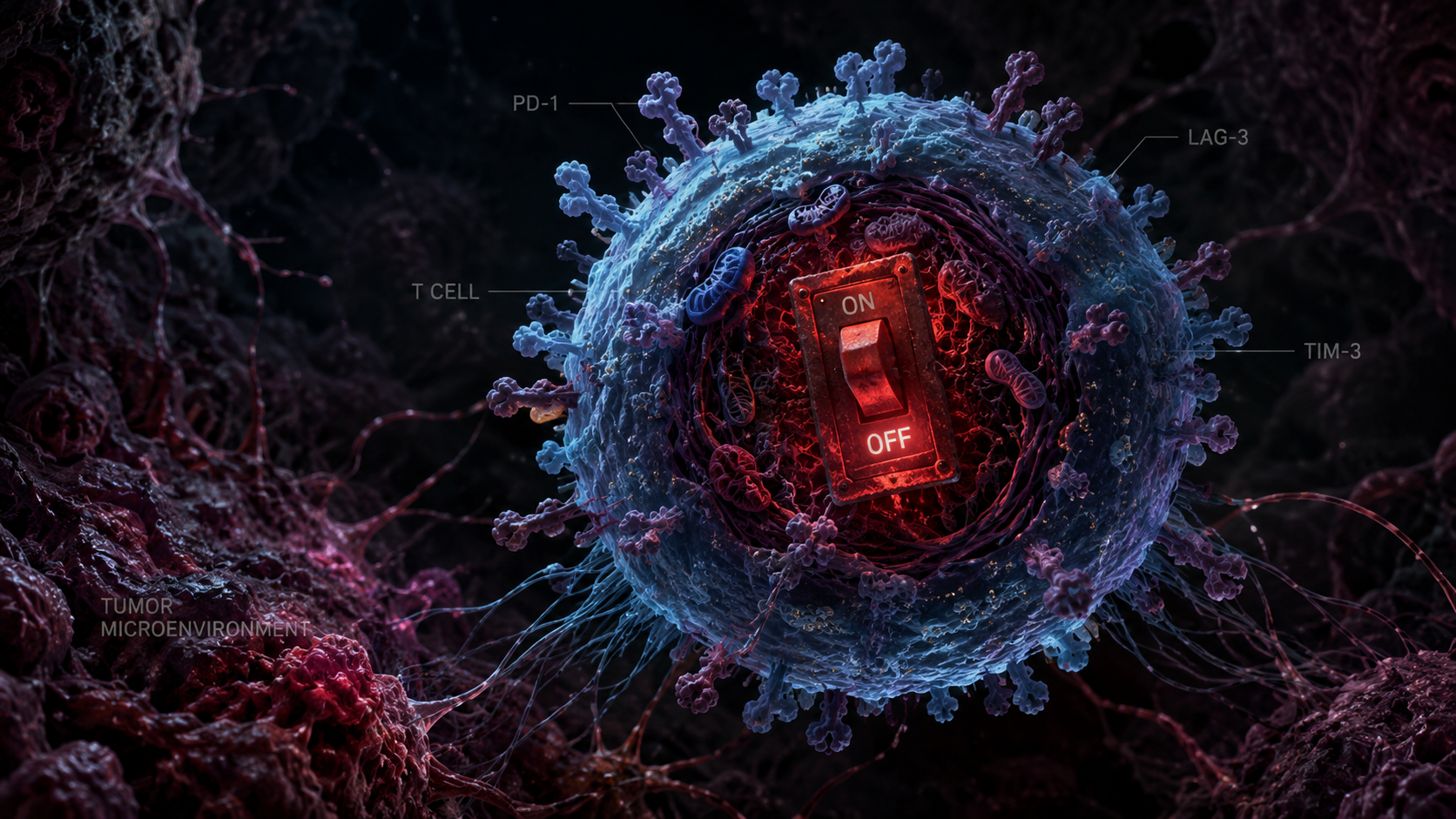
But cancer isn’t passive. Some tumors survive not because the immune system fails to notice them, but because they flip a hidden switch inside your own immune cells — a molecular brake that tells your body’s soldiers to stand down. Understanding why cancer evades the immune system has been one of oncology’s most urgent and frustrating quests for decades. And in June 2026, scientists may have finally found a key piece of the answer.
The Immune System’s War Against Cancer
To understand what goes wrong, you first need to appreciate what goes right. Your immune system runs continuous surveillance across every tissue in your body. T cells — a type of white blood cell — are the primary assassins. They patrol your bloodstream and lymph nodes, scanning the surface of every cell they encounter for molecular ID tags that signal something is wrong. When a cell mutates and starts behaving abnormally, its surface proteins change. T cells recognize these changes, lock on, and destroy the threat.
The relationship between the immune system and cancer is, in normal circumstances, entirely one-sided. This process, called immunosurveillance, is remarkably effective. Cancer researchers believe the immune system eliminates the vast majority of potentially cancerous cells long before they ever form a detectable tumor. The cancers that do develop are, in a sense, the ones that got away — cells that evolved just enough camouflage to slip past the patrol.
For years, the leading explanation for how cancer avoids detection — or rather, how it avoids being stopped — focused on signals sent from the tumor itself. Cancer cells learned to express specific proteins on their surface that essentially waved a white flag at T cells, saying: don’t attack me, I’m one of you. This is the mechanism that existing immunotherapy drugs like pembrolizumab (Keytruda) target. Block the false flag, and T cells resume their attack.
It works. For some patients, dramatically. But for many others — sometimes the majority — it doesn’t. Tumors that initially respond to immunotherapy stop responding. Patients who never responded in the first place offer no clear biological explanation for why. The assumption was always that the tumor was sending some signal doctors hadn’t identified yet.
A landmark 2026 study published in Nature suggests the problem may be even more fundamental than that. The brake isn’t coming from the tumor at all. The brake isn’t coming from the tumor. It’s coming from inside the T cell itself.
SLAMF6: The Switch Hidden Inside Your Own Cells
The molecule at the center of this discovery is called SLAMF6 — Signaling Lymphocytic Activation Molecule 6. It’s a receptor protein that sits on the surface of T cells, and until recently, its exact role in cancer immunity was poorly understood. Scientists knew it existed. They suspected it had both activating and inhibitory effects. What they didn’t know was how it actually behaved in the tumor environment.
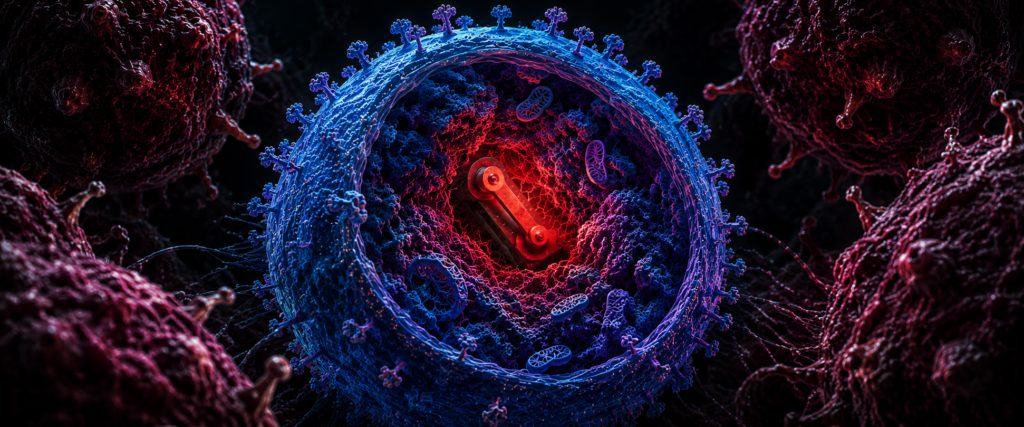
Dr. André Veillette and colleagues at the Université de Montréal discovered something deeply counterintuitive: SLAMF6 acts as a self-activating brake. Unlike other immune checkpoints that require a signal from an outside source — like a protein on a tumor cell — SLAMF6 triggers itself. It binds to copies of itself on the same T cell or on neighboring T cells, suppressing immune activity without needing any instruction from the tumor.
This is the key distinction. The immune system is, in a sense, switching itself off. The tumor doesn’t need to send a signal. It just needs to wait.
The researchers found that SLAMF6 is most highly expressed on a specific subtype called progenitor exhausted T cells — the cells that retain the capacity to be “rescued” by immunotherapy. These are exactly the T cells that checkpoint inhibitor drugs are designed to reactivate. But if SLAMF6 is already suppressing them from within, existing drugs that block external signals may be fighting the wrong battle.
This goes some way toward explaining why cancer evades the immune system even when patients receive aggressive immunotherapy.
Why Your T Cells Get Exhausted
The concept of T cell exhaustion is central to understanding why cancer is so hard to kill once it establishes itself. T cells that are chronically exposed to a tumor — repeatedly stimulated but unable to eliminate the target — progressively lose their killing capacity. They become exhausted: still present, still recognizing the cancer, but functionally impaired.
Much like body’s internal systems, immune exhaustion isn’t a single catastrophic failure. It’s a gradual dimming. Exhausted T cells lose their ability to proliferate, to produce cytokines (the chemical signals that coordinate immune attacks), and ultimately to kill. The tumor, meanwhile, continues to grow.
What SLAMF6 appears to do is accelerate this exhaustion process by suppressing T cells from within before they ever reach the fully exhausted state. They get stuck in a dysfunctional middle ground — still identifiable as active immune cells, but functionally compromised. This pattern of internal biological self-defeat mirrors why humans fear death differently than other species: our biology sometimes works against us in ways no external threat could manage. The tumor doesn’t need to kill the T cells. It just needs to keep them tired.
How Why Cancer Evades the Immune System Is Being Rethought
This discovery reshapes the core question researchers have been asking. For years, the field focused on how tumors camouflage themselves — what signals they send, what proteins they express, how they alter the surrounding tissue environment to suppress immune activity. All of that is real and important. But the SLAMF6 finding introduces an entirely different category of immune evasion: one that is intrinsic to the T cell itself.
It’s the difference between a prison guard being bribed by an inmate and the guard falling asleep on his own. The outcome is the same — the prisoner escapes — but the solution is entirely different. If you’ve only been looking for evidence of bribery, you’ll never fix the sleeping problem.
This framing also helps explain a persistent clinical puzzle. Patients with identical tumor types, identical genetic profiles, and identical immunotherapy regimens sometimes have radically different outcomes. Some go into complete remission. Others don’t respond at all. The tumor-centric explanation struggles to account for this variation. But if part of the answer lies in how individual patients’ T cells express SLAMF6 — how strongly their immune system applies its own internal brake — then the variation starts to make more sense.
The researchers developed custom antibodies in mouse models that block SLAMF6, preventing it from suppressing T cell activity. The results showed significantly stronger tumor-killing responses. The same precision editing tools that are transforming genetic medicine may also offer future pathways to modulating SLAMF6 expression directly in patients.
The Next Generation of Cancer Treatment
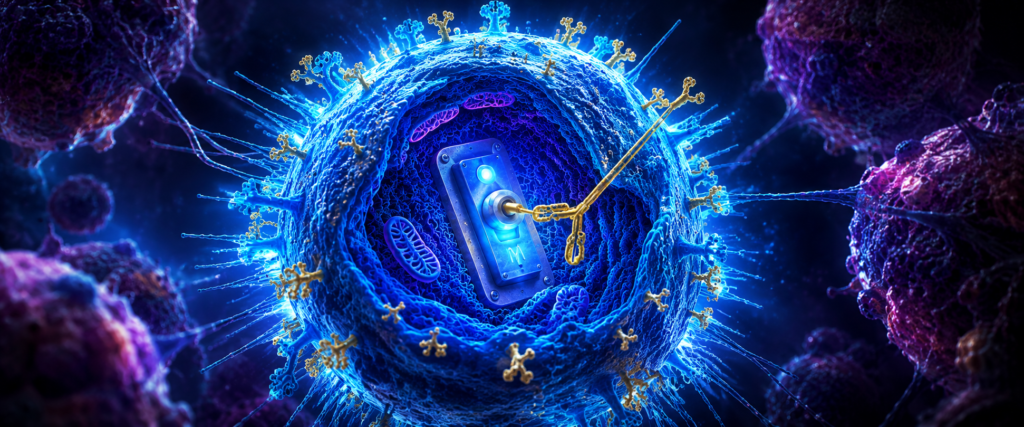
The clinical implications are significant, and to understand them, it helps to have cancer immunotherapy explained from scratch. Current immunotherapy drugs — all of them — work by blocking signals from outside the T cell. PD-1 inhibitors block the tumor’s false flag. CTLA-4 inhibitors prevent the tumor microenvironment from suppressing T cell activation. They are all, in essence, trying to remove external brakes.
SLAMF6 is an internal brake. Blocking it would require a fundamentally different class of drugs — antibodies designed not to interact with tumor proteins but to interact with T cell proteins. This is a new therapeutic frontier.
It also opens the door to combination strategies. A patient might receive an existing PD-1 inhibitor alongside a SLAMF6 blocker, attacking immune evasion from both directions simultaneously. For the patients whose cancers currently don’t respond to immunotherapy — and there are millions of them — this could represent a meaningful new path.
Understanding how the body signals danger to itself has repeatedly led medicine to places it didn’t anticipate. This is another example. The assumption was always that the enemy was outside. The switch was inside all along.
What This Means for You
Cancer immunotherapy has arguably been the most transformative development in oncology since chemotherapy. In under two decades, it has turned several previously terminal diagnoses into manageable conditions — even, for some patients, cures. But its limitations have always loomed large, and those limitations have driven one of the most expensive and urgent research programs in modern medicine.
The SLAMF6 discovery doesn’t immediately change treatment options for current patients. Translating a mouse model result into a human therapy typically takes years of clinical trials. But it changes the map. It tells researchers that the territory they were exploring — specifically, how tumors avoid immune detection at the cellular level — had an unexplored region they hadn’t seen.
The recurring theme in the relationship between the immune system and cancer is that each time researchers think they understand the rules, biology reveals another layer. Every time oncologists close one escape route, biology reveals another. But occasionally, a discovery doesn’t just close a route — it reveals that the map itself was incomplete.
This may be one of those moments. The question of why humans fear death differently than any other species may partly come down to this: we are uniquely aware that something inside us is capable of turning against us — and that the very system designed to protect us can, under the right conditions, be made to stand aside.
The cancer didn’t find a way around your immune system. It found a way to make your immune system get out of its own way.