
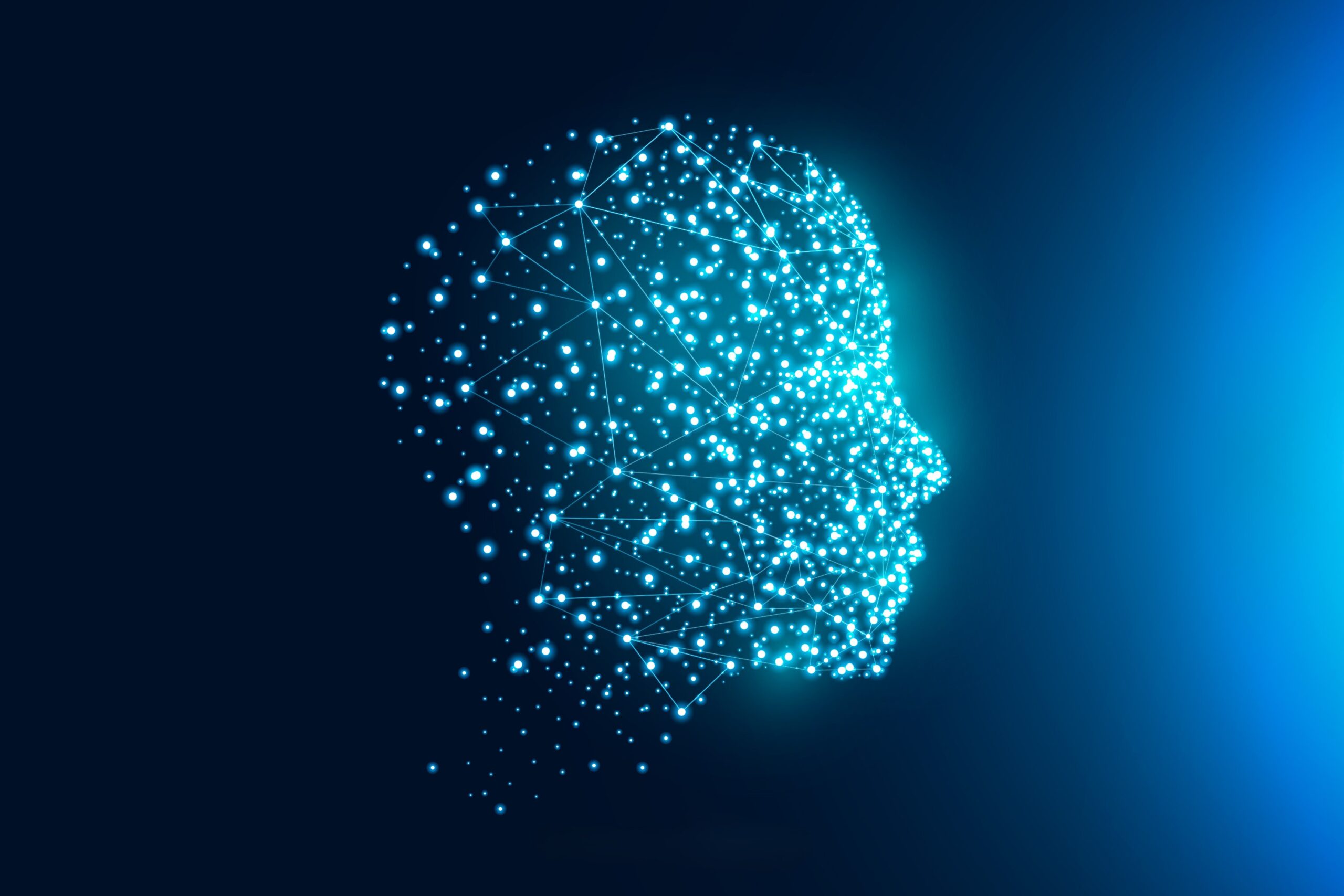
A Universe Hiding Inside Your Skull. Step outside on a clear night and look up. The sky stretches endlessly, scattered with stars that have burned for billions of years. Somewhere out there, in the spiral arms of the Milky Way, hundreds of billions of stars glow—each one a massive sphere of burning gas, each one separated by distances so large that light itself takes years to travel between them.
For centuries, that sky represented the ultimate symbol of complexity and scale. Nothing, it seemed, could rival the vastness of a galaxy.
But here’s the twist that still makes scientists pause.
Something even more crowded, more intricate, and more astonishing than that galaxy exists inside your head right now.
Not metaphorically. Not poetically. Literally.
Inside the human brain lives a network so dense that if you could shrink yourself down to the size of a molecule and wander through it, you would find branching structures stretching in every direction—signals flashing, pathways forming and dissolving, patterns shifting constantly like storms across a planet’s atmosphere.
Scientists estimate that the human brain contains about 86 billion neurons, a figure refined by neuroscientist Suzana Herculano-Houzel, whose groundbreaking work corrected decades of rough guesses about brain cell counts.
But neurons alone aren’t the full story.
The true marvel lies in the connections between them.
Where the Real Numbers Become Unbelievable
Each neuron inside your brain behaves like a tiny communication hub. It sends electrical signals along thread-like structures and receives signals from neighboring cells. These meeting points are called synapses, and they are where information is passed from one neuron to another.
And here’s where the numbers begin to feel unreal.
A single neuron can form thousands of synaptic connections. Multiply that by tens of billions of neurons, and suddenly the scale explodes into astronomical territory. Scientists estimate that the total number of synaptic connections in the human brain falls somewhere between 100 trillion and 1 quadrillion synapses.
That’s not just a big number—it’s a number that resists imagination.
Now compare that to the number of stars in the Milky Way. Astronomers studying galactic structure estimate that our galaxy contains roughly 100 to 400 billion stars. That sounds enormous—and it is—but when placed next to the number of synapses inside the human brain, the galaxy begins to look surprisingly sparse.
Your brain doesn’t just rival the Milky Way in complexity.
It surpasses it—by hundreds or even thousands of times in sheer connection count.
That comparison alone changes how many people think about their own minds. Suddenly, the brain stops feeling like just another organ and starts to resemble something cosmic.
How Scientists Learned to Count the Brain’s Hidden Cities
For much of history, scientists had no reliable way to measure how many neurons lived inside the human brain. Early anatomists could observe the brain’s shape and structure, but counting its microscopic cells was almost impossible with the tools available at the time.
Even into the late twentieth century, textbooks repeated the estimate of 100 billion neurons without strong evidence to support it. It was more tradition than precision.
That changed when modern neuroscience introduced better counting techniques. Using chemical methods to break brain tissue into uniform samples, Suzana Herculano-Houzel demonstrated that the actual number was closer to 86 billion neurons, refining one of the most widely quoted figures in biology.
Once scientists had a reliable neuron count, attention shifted toward something even more important—the connections linking those neurons together.
That’s when the scale of the brain truly revealed itself.
Because neurons don’t exist in isolation. They form dense communication webs, passing electrical and chemical signals thousands of times per second. Each signal represents information—memories, sensations, decisions, emotions—flowing across an intricate biological network.
If neurons are the stars of the brain, then synapses are the invisible gravitational forces holding the universe together.
Why Synapses Matter More Than Neurons
It’s tempting to think that intelligence depends mainly on the number of neurons you have. More neurons, more power—simple, right?
Not quite.
What matters even more than neuron count is how those neurons connect. Synapses are where learning happens. They strengthen when used frequently and weaken when neglected. This constant reshaping of connections is known as neuroplasticity, and it’s one of the most remarkable features of the human brain.
Every time you learn a new skill—whether it’s solving a math problem, memorizing a phone number, or recognizing a familiar face—your brain changes physically. Tiny synapses grow stronger. New pathways form. Old ones fade.
It’s not poetic language. It’s measurable biology.
Your experiences literally rewire your brain.
That means the network inside your skull isn’t fixed like the stars in a galaxy. It’s fluid, dynamic, constantly shifting in response to your actions, your environment, and even your thoughts.
A galaxy evolves over billions of years.
Your brain evolves every day.
The Brain’s Fragile Complexity
With such enormous complexity comes vulnerability. A system built from trillions of connections can fail when those connections begin to break down.
One of the most well-known examples is Alzheimer’s disease, a condition that gradually destroys synapses and neurons. As connections disappear, memories fade, reasoning weakens, and familiar faces become strangers.
Scientists studying this disease often focus less on neuron loss alone and more on synaptic damage, because the loss of communication pathways is what disrupts the brain’s internal network.
It’s like watching roads disappear from a city map. Eventually, traffic stops flowing, and the city can no longer function as it once did.
Understanding how synapses grow, strengthen, and fail remains one of the biggest challenges in modern neuroscience.
And solving that puzzle could unlock treatments for some of the most devastating neurological conditions known to medicine.
The Cosmic Perspective That Changes Everything
Comparing the brain to the Milky Way isn’t just a clever headline—it’s a powerful mental shift.
It reminds us that the universe isn’t only something far away in deep space. It exists at microscopic scales as well, hidden within living tissue.
Every thought you’ve ever had—every fear, every idea, every memory—exists as patterns flowing through that immense network of synapses. Every decision you make reshapes that network slightly, reinforcing some connections while letting others fade.
Right now, as your eyes move across these words, billions of neurons are firing in coordinated bursts. Signals race along microscopic pathways, forming interpretations, building meaning, storing fragments of information that may last seconds—or decades.
All of it unfolding silently, invisibly, inside a space smaller than a football.
And that realization carries a strange kind of awe.
Because when you look up at the night sky and see the scattered stars of the Milky Way, you’re witnessing one of the grandest structures in the cosmos.
But when you look inward—into thought itself—you’re encountering something just as vast.
A galaxy of connections.
A universe made not of burning gas and gravity, but of memory, electricity, and possibility.
And unlike the stars, this universe isn’t distant.
It’s you.