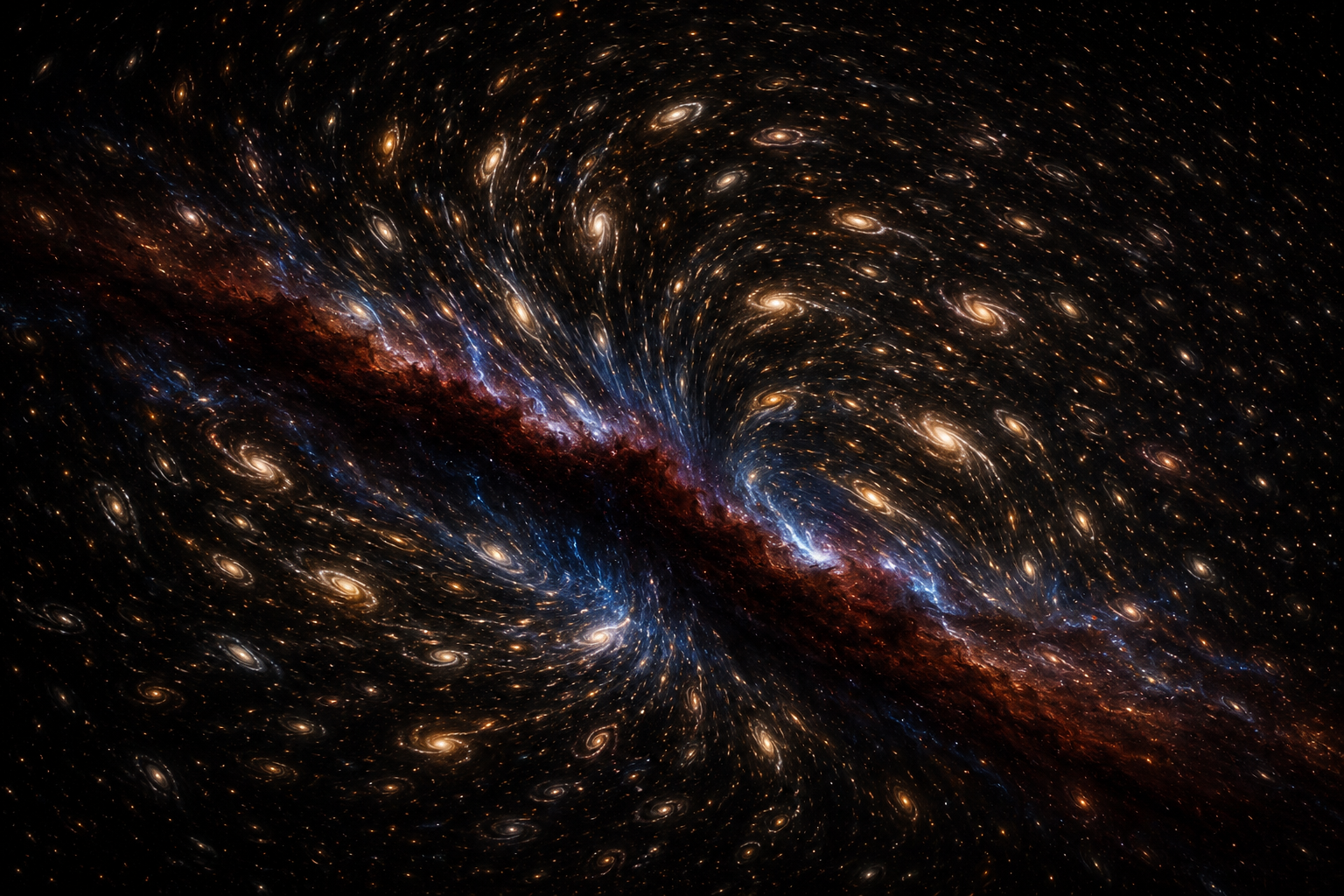
Something is dragging the Milky Way through space at 600 kilometres per second. Not our orbital motion around the galactic centre, not the general expansion of the universe — something else, something additional, pulling us and roughly 100,000 neighbouring galaxies toward a single point in space. What is the Great Attractor is one of cosmology’s most unsettling open questions: a gravitational anomaly of almost incomprehensible mass, sitting 150 to 250 million light-years away, that we cannot directly observe — because our own galaxy is blocking the view.
What Is the Great Attractor: The Pull You Cannot Feel
The story begins with a discovery that should have been unremarkable. In the late 1970s and early 1980s, astronomers mapping galaxy motion noticed something that didn’t fit. The universe was expanding as expected, but our local cluster was also drifting in a specific direction — toward a point near the constellation Centaurus — with a Milky Way peculiar velocity of around 600 km/s that no visible mass could account for.
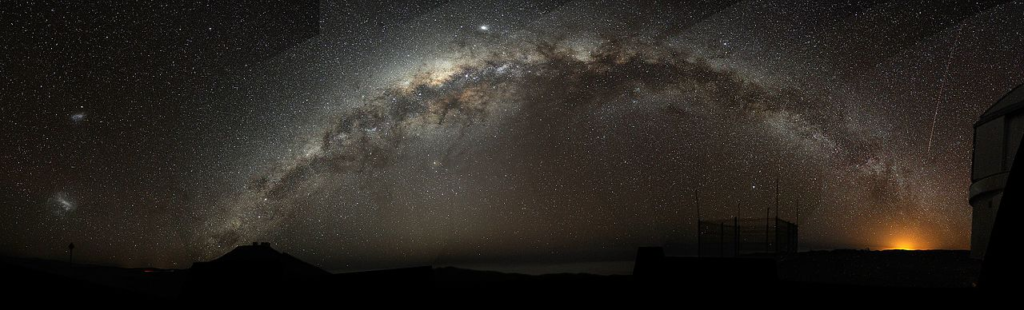
Something was pulling, and it was enormous. Scientists named the source the Great Attractor, and the hunt to understand it has continued ever since.
The problem is the Zone of Avoidance — the region of sky obscured by our own galactic plane. The Milky Way’s dust and stellar fields absorb visible light from everything behind them, and Zone of Avoidance astronomy requires working in X-ray and radio wavelengths to partially pierce it. What those observations revealed is not a single massive object but a concentrated region of space — the gravitational heart of the largest structure we belong to.
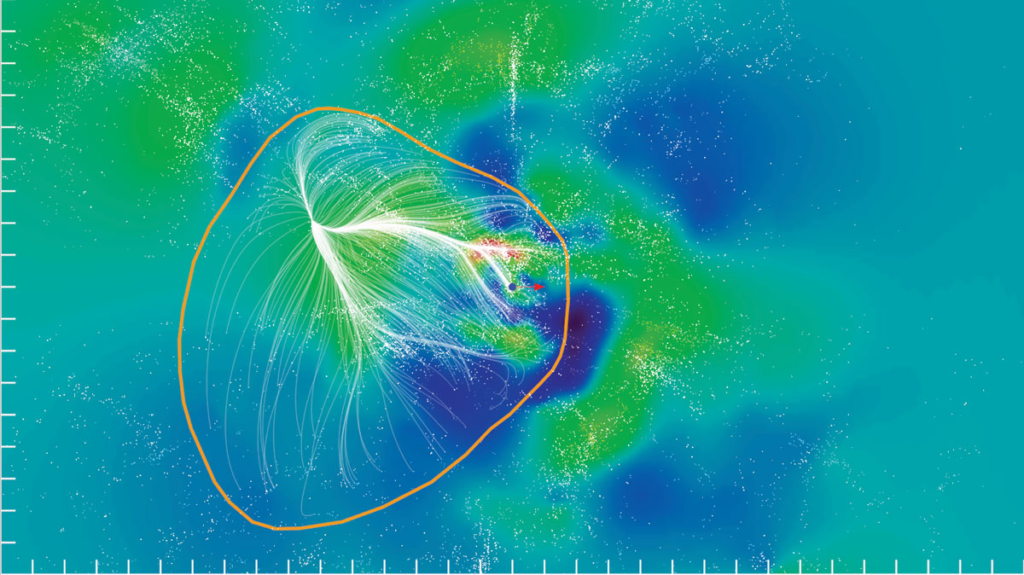
That structure is the Laniakea Supercluster. Laniakea supercluster explained through galaxy flow mapping spans 520 million light-years across, contains roughly 100,000 galaxies including our own, and has an estimated mass of 10¹⁷ solar masses. The Great Attractor is its centre of gravitational flow — gravitational time dilation explained at supercluster scales gives some sense of what that mass means, while the cosmic void beyond its edges marks where the pull thins into emptiness.
The Hidden Monster at the Centre
Observations that pierced the Zone of Avoidance revealed the Norma Cluster — a rich concentration of galaxies about 220 million light-years away — as the most likely dominant mass at the Great Attractor’s core. It is not falling into a black hole — no event horizon, no singularity — but the gravitational dynamics share the same essential logic: proximity deepens the pull, and 100,000 galaxies are already in the field.
The mass required to produce the observed motion is estimated at 10¹⁶ solar masses — tens of thousands of galaxies worth of material. And yet even that figure may be incomplete, because recent research has revealed something stranger: the Great Attractor itself may be falling toward something larger.
What Is the Great Attractor Actually Falling Toward
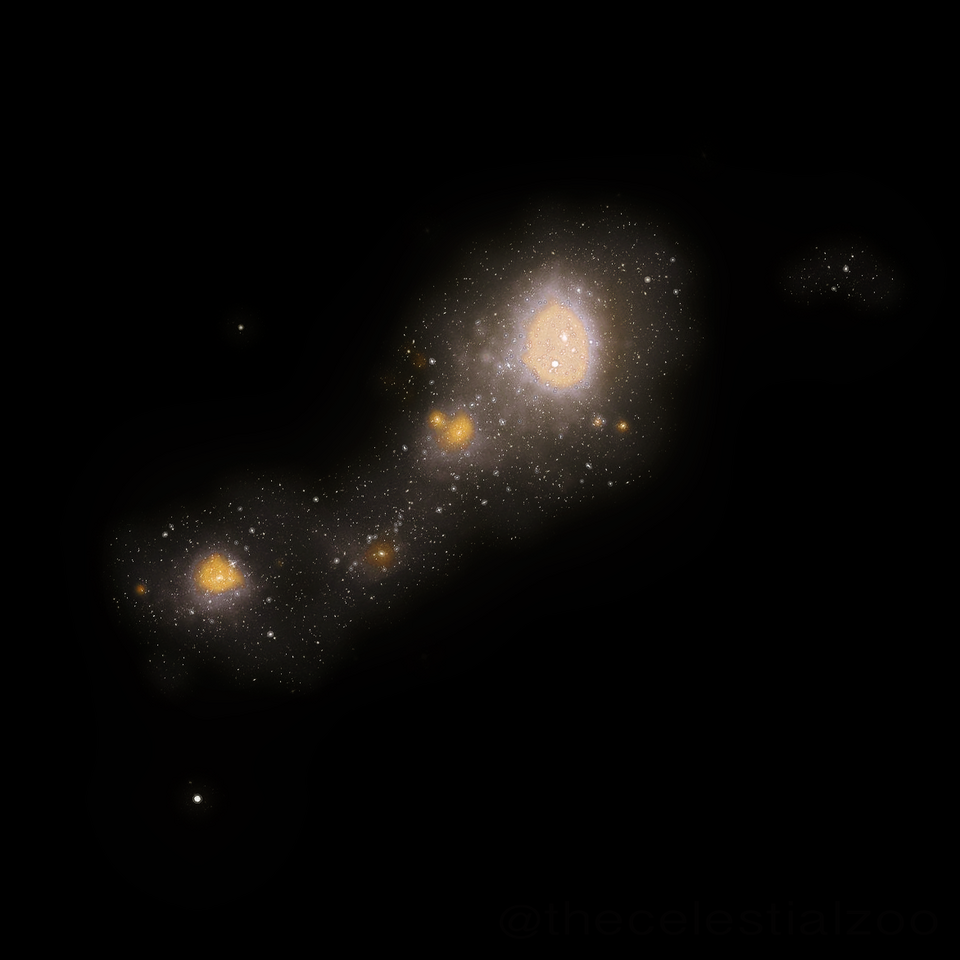
Beyond it, at roughly 600 million light-years from Earth, lies the Shapley Supercluster — one of the densest known concentrations of galaxies in the observable universe. Shapley Supercluster gravity appears to be the dominant large-scale attractor in our cosmic neighbourhood, with the Great Attractor functioning as an intermediate basin rather than a final destination. The Milky Way falls toward the Great Attractor; the Great Attractor falls toward Shapley — a nested hierarchy of mass stretching back to the universe’s first second when matter first began to clump.
High-resolution Bayesian reconstructions published in 2024–25 reinforced this picture: what is the great attractor becomes a scale-dependent question. At small scales, our galaxy’s endpoint is the Virgo Cluster. At intermediate scales, the Great Attractor. At large scales, Shapley. A single mysterious point has resolved into a network of overlapping gravitational basins.
The Attractor We Will Never Reach
Here is the final twist: we will almost certainly never arrive. The universe’s accelerating expansion — driven by dark energy — is pulling everything apart faster than local gravity can hold it together at supercluster scales. The Fermi paradox asks where everyone else in the universe is; part of the answer is that structures like Laniakea are temporary arrangements, and on long enough timescales the expansion wins. The Great Attractor will become unreachable before we reach it.
We are falling toward a destination we will never reach, inside a galaxy that hides it from us. Does the present moment exist the same way at 600 kilometres per second as it does standing still? What is the Great Attractor, in the end, but the universe reminding us that nothing — not even the ground beneath an entire galaxy — is as fixed as it appears.