
Impossible planets that exist are not science fiction. They are real, confirmed, catalogued objects orbiting real stars — and several of them break the rules of planetary science so thoroughly that the researchers who found them spent months assuming they had made a mistake.
They hadn’t.
The universe, it turns out, did not read the textbook. And some of the most disorienting discoveries in modern astronomy are not distant galaxies or black holes. They are planets — worlds that have no right to be there, built in ways our models said were impossible, surviving conditions that should have destroyed them long ago.
The Planet That Orbits Too Close to Exist
The first category of impossible planets that exist are the ones that simply should not survive their own star.
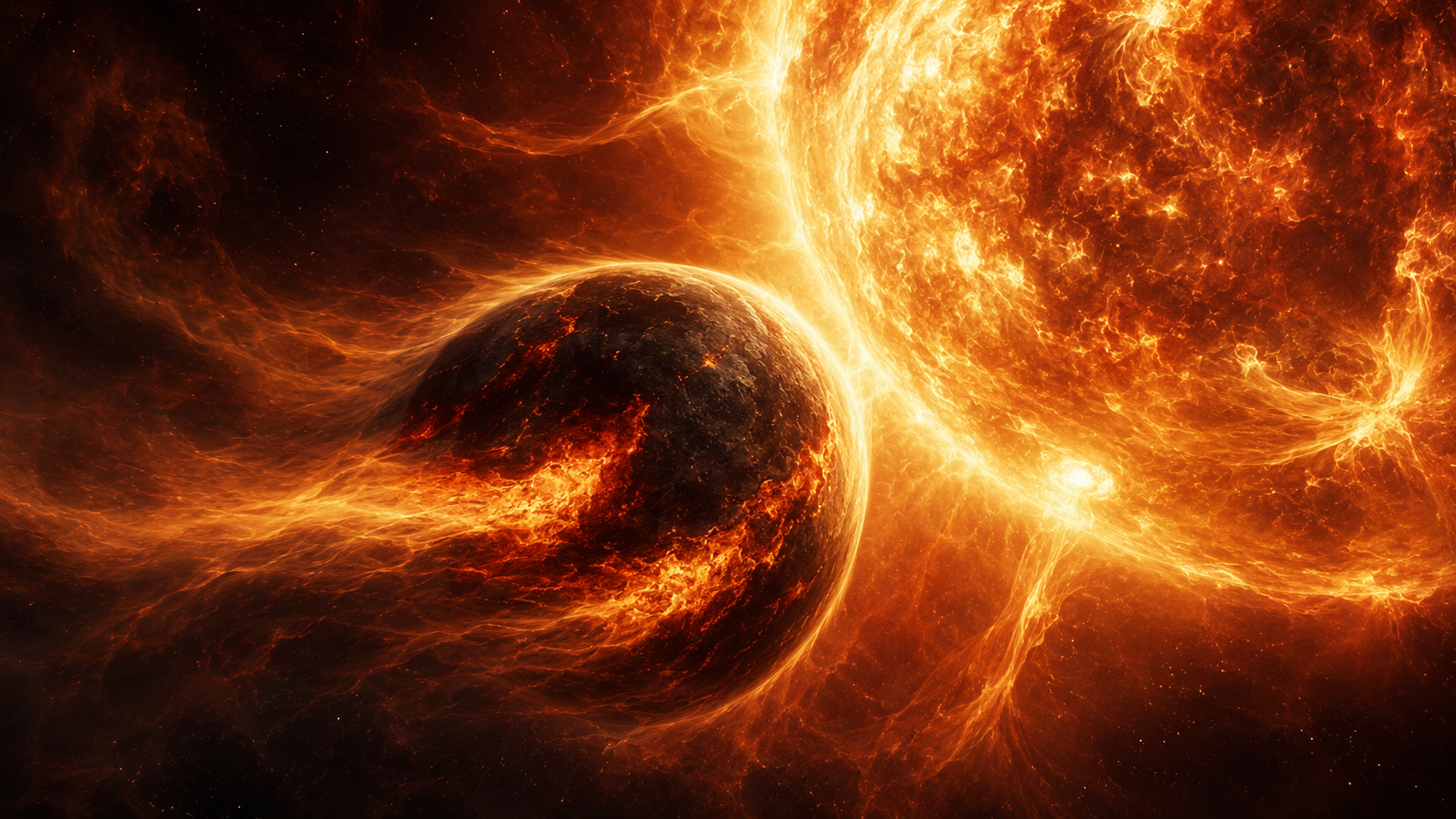
WASP-12b is a gas giant roughly twice the size of Jupiter. It orbits its host star at a distance of about 3.4 million kilometres — for context, Mercury orbits the Sun at around 58 million kilometres. WASP-12b completes a full orbit in just over a day. It is so close to its star that the temperature on its dayside reaches around 2,500 degrees Celsius, hot enough to vaporise iron. Its atmosphere is being actively stripped away. The star’s tidal forces are deforming the planet into an egg shape, pulling mass off its surface and drawing it into a disc around the star.
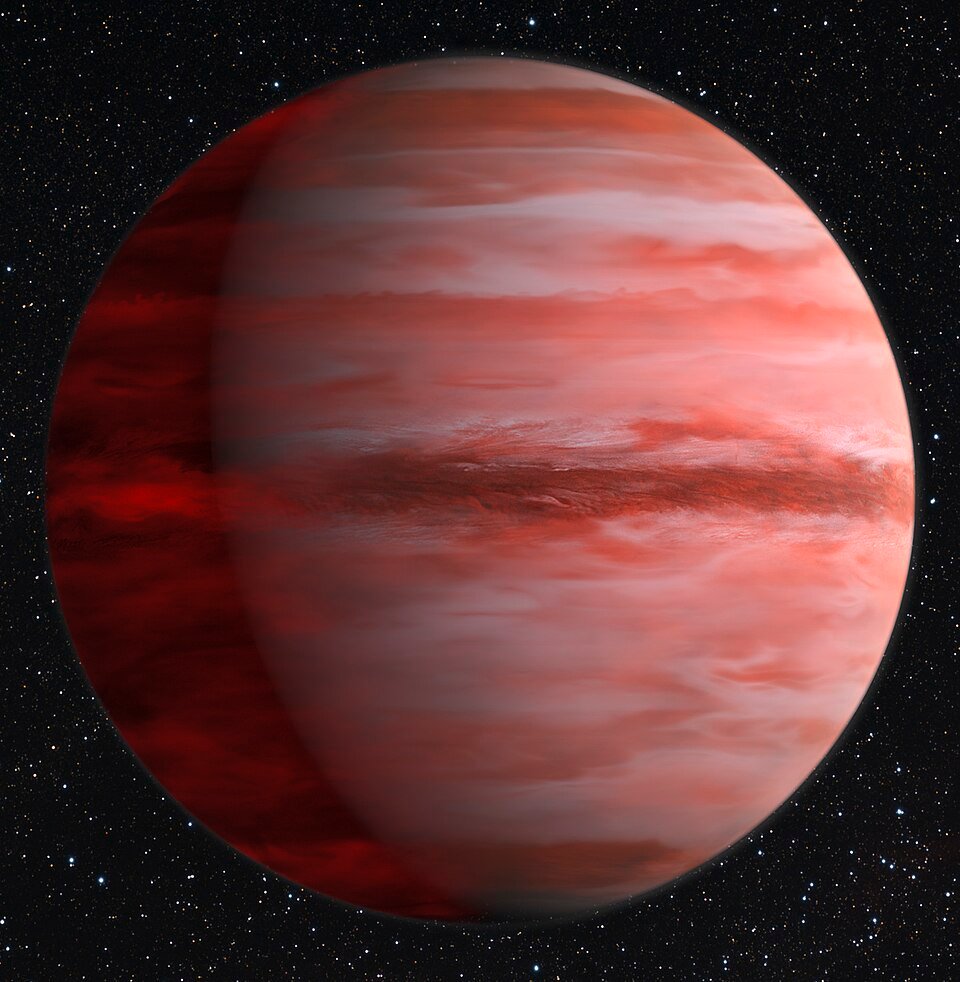
WASP-12b is being consumed. It has perhaps three million years left — which sounds like a long time until you remember that the universe is 13.8 billion years old. In cosmic terms, we arrived just in time to watch a planet die.
What makes it impossible is not that it’s being destroyed. It’s that it exists at all. At that distance, the tidal forces should have torn the planet apart before it ever consolidated. The leading theory is that it formed further out and migrated inward — a process planetary science allows for, but not quite so dramatically, and not quite so close. WASP-12b sits at the edge of what the models permit, and perhaps slightly beyond.
The Planet That Orbits the Wrong Way
Most planets in any solar system orbit their star in the same direction the star rotates. This is not a coincidence — it is a consequence of how solar systems form from a rotating disc of gas and dust. Conservation of angular momentum means everything ends up spinning and orbiting in broadly the same direction.
WASP-17b does not.
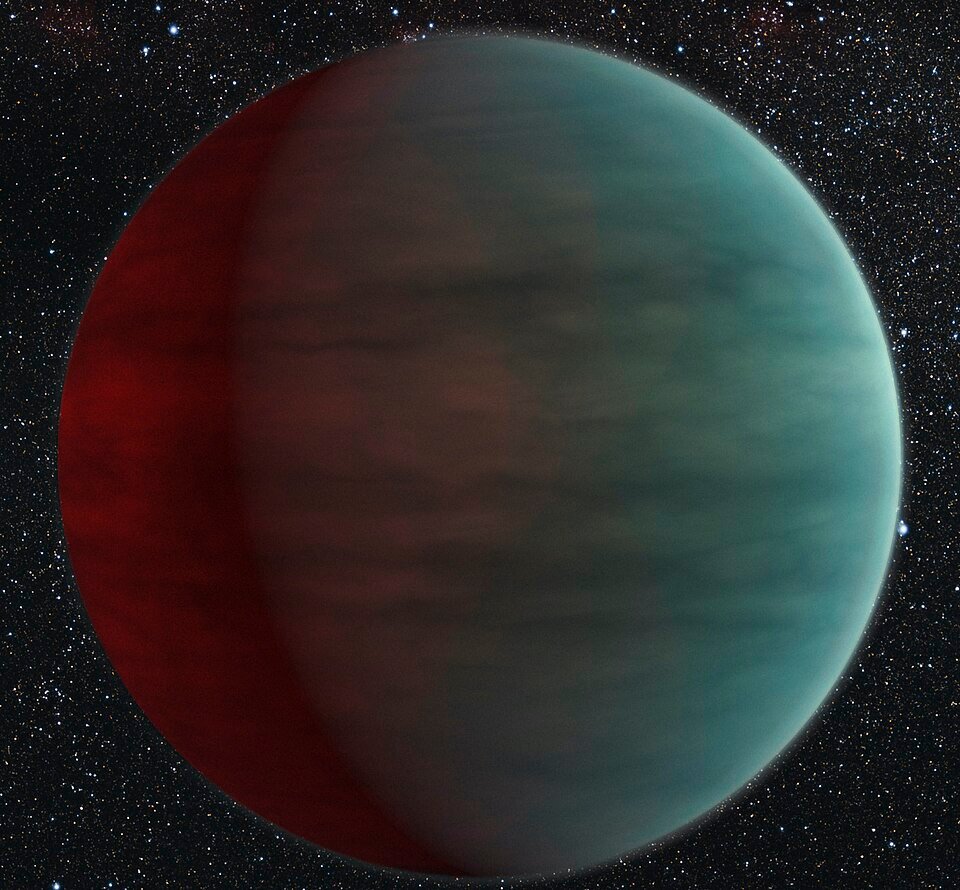
It orbits its star in retrograde — the opposite direction to the star’s rotation. Not slightly offset. Backwards. When it was confirmed in 2009, it was the first exoplanet ever found with a confirmed retrograde orbit, and it immediately invalidated several tidy assumptions about how gas giants end up where they are.
The leading explanation involves gravitational interactions — possibly with another planet, or a passing stellar companion — that flipped the orbit early in the system’s history. But the mechanics required are extreme, and the probability of ending up in a stable retrograde orbit rather than simply being ejected from the system entirely is low enough that WASP-17b’s existence remains genuinely surprising. It is one of several impossible planets that exist in direct defiance of the angular momentum rules that govern almost every solar system we have ever studied.
The James Webb Space Telescope has since taken detailed readings of WASP-17b’s atmosphere — finding quartz crystals suspended in clouds at temperatures above 1,500 degrees. A planet that shouldn’t exist, raining glass in the wrong direction around the wrong kind of orbit.
The Planet That Is Older Than the Elements It Needs
PSR B1257+12 is a pulsar — the spinning remnant of a dead star, a neutron star rotating hundreds of times per second, blasting the surrounding space with radiation intense enough to strip electrons from atoms at considerable distances.
It has planets.
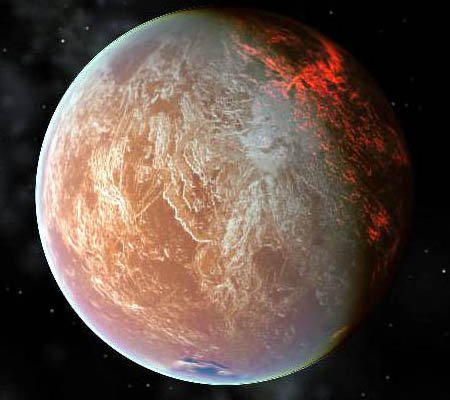
Three of them. Confirmed in 1992, they were the first exoplanets ever discovered. And they represent perhaps the most philosophically disturbing category of impossible planets that exist — not because of their physical properties, but because of what their existence implies.
Pulsars form from supernova explosions. Any planets that existed before the explosion would have been vaporised or violently ejected. These planets formed after the explosion — coalescing from the debris disc of a dead star, in an environment bathed in lethal radiation, around an object that should provide no stable conditions for planetary formation whatsoever.
They formed anyway.
This tells us something important — and unsettling. Planet formation is apparently so robust, so fundamental a process, that it happens even in the most hostile environments the universe produces. Even in the first chaotic moments after stellar death, matter wants to clump. Gravity does not care about the conditions. It just pulls.
The Planet Made of Diamond
55 Cancri e is a super-Earth — roughly twice the diameter of our planet, orbiting its star in just 18 hours. Early models of its composition, based on its mass and density, suggested it could be largely composed of carbon in a high-pressure crystalline form.
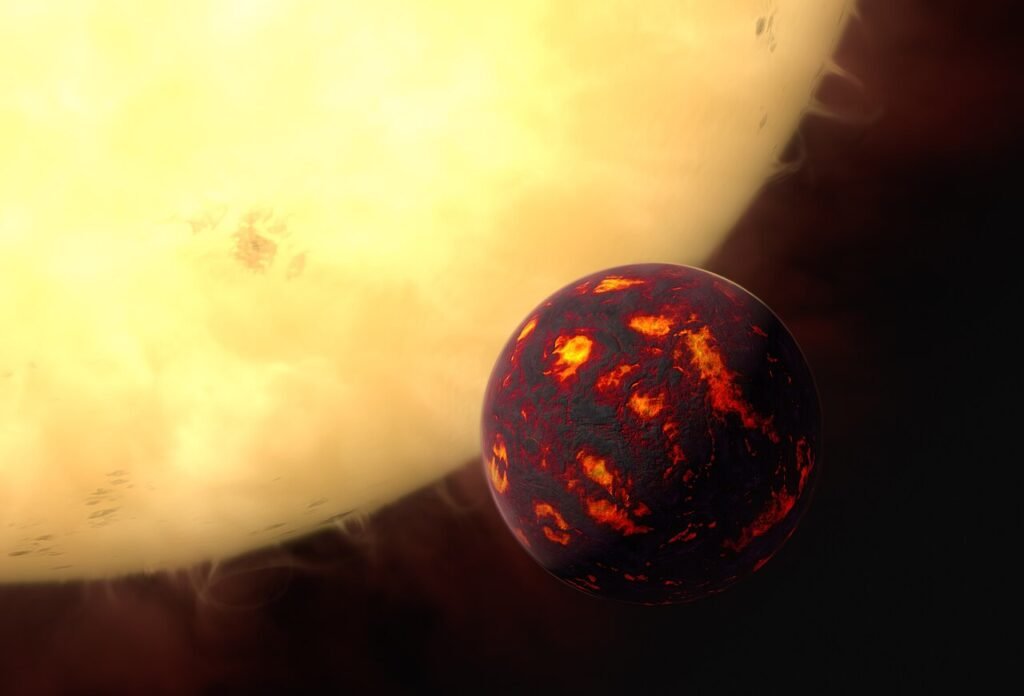
Diamond. A planet potentially made of diamond, roughly 40 light-years away.
The diamond-planet hypothesis has since been complicated by more detailed atmospheric readings — the composition is now thought to be more mixed, possibly with a lava ocean on its surface and a carbon-rich mantle beneath. But the core possibility has not been ruled out, and 55 Cancri e remains one of the most extreme examples of how planetary conditions can produce environments that have no analogue anywhere in our solar system.
The universe does not restrict itself to the materials and conditions familiar to Earth. It builds with whatever physics allows, in whatever configurations gravity and pressure produce — including, apparently, worlds that would be worth more than the entire global economy.
What They Tell Us About Everything Else
The deeper significance of impossible planets that exist is not the spectacle. It is the epistemological warning — a reminder that every model is only as good as the data that built it.
Every time astronomers find a planet that the models said couldn’t form, or couldn’t survive, or couldn’t orbit the way it does, the models get revised. That is how science works. But the sheer frequency of rule-breaking exoplanets discovered since 1995 — when the first planet around a sun-like star was confirmed — has forced a much more fundamental rethink. The assumption that our solar system was typical turns out to have been remarkably parochial. The Fermi Paradox gets stranger still when you realise that most solar systems look nothing like ours.
What the galaxy actually contains, it seems, is not orderly collections of well-behaved planets on sensible orbits. It contains chaos, migration, collision, and improvisation on a scale that the physics of the universe permits but human intuition struggles to accommodate.
The planet that should not exist is not an anomaly. It is the rule — and impossible planets that exist across the galaxy are the evidence. We were the anomaly all along, sitting in our improbably stable solar system, looking out at a universe full of worlds that broke every assumption we had about how planets were supposed to work — and mistaking our local order for a universal law.