
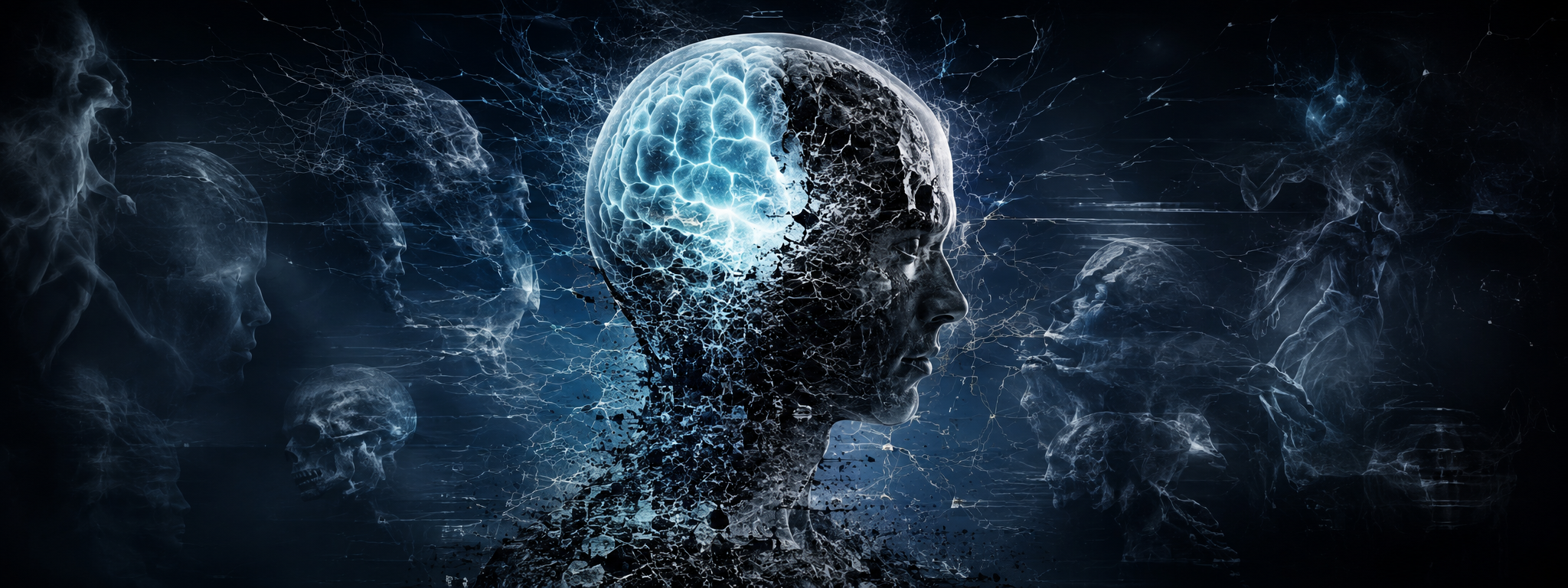
The most extreme case of sleep deprivation effects ever recorded began on the night of January 8, 1964, when a seventeen-year-old from San Diego named Randy Gardner decided not to sleep. Not for a night, not for a week — but for as long as humanly possible. He wanted a science fair project. What he got instead was a full-blown psychological unraveling, a body in freefall, and a record that still stands today: 264 hours awake. Eleven days and change without a single minute of sleep.
Gardner survived. But what happened to him along the way forces us to confront something unsettling — that sleep isn’t a luxury, or even a necessity in the way food and water are necessities. It’s the very mechanism by which a human being stays human at all. Strip it away completely, and what comes apart isn’t just your energy levels. It’s your perception of reality. Your identity. Your ability to trust your own mind.
So what exactly happens when a body goes that far? What does sleep deprivation do to you at two days, at five days, at eleven?
Day 1 Sleep Deprivation Effects: The Illusion That You’re Fine
The cruelest thing about the first 24 hours of sleep deprivation is that you can mostly function. You’re irritable, your eyes feel like sandpaper, and you probably can’t solve a complex math problem under pressure. But you can hold a conversation. You can drive a car. You feel tired — not broken.
This is the illusion. Under the surface, your brain has already started to change.
The prefrontal cortex — responsible for judgment, planning, and impulse control — begins losing efficiency almost immediately. The emotional centres of the brain, particularly the amygdala, become hyperactive. Studies have shown that after just one sleepless night, the amygdala responds to negative stimuli with nearly 60% more reactivity than it would after normal sleep. The brake on your emotions quietly fails.
Your body is also beginning to run up a biological debt. While you sleep, your brain actively clears toxic waste products — including beta-amyloid, the protein associated with Alzheimer’s disease — through the glymphatic system. By staying awake, you’re halting this cleaning process. The trash is piling up with nowhere to go.
Day 2: When the Body Fights Back
By the second day, the sleep deprivation effects on the body’s stress systems become impossible to ignore. Cortisol and adrenaline surge to keep you artificially alert. Your heart rate climbs. You may feel a strange, almost manic energy in the afternoon — a second wind that feels like a reward but is actually your stress hormones screaming.
Cognitively, things are beginning to slip. Concentration fractures. Tasks that should take ten minutes stretch to thirty. Working memory — the mental scratch pad that holds information just long enough to use it — starts dropping data.
This is also when microsleeps begin. Microsleeps are exactly what they sound like: tiny, involuntary sleep episodes lasting anywhere from a fraction of a second to thirty seconds. The terrifying part is that you don’t know they’re happening. Your eyes may be open. You may appear to be listening. But your brain has briefly, desperately, switched off — and you will have no memory of those seconds at all.
Day 3: The Mind Starts to Break
Randy Gardner hit day three and couldn’t tell the difference between a street sign and a person standing on a corner. He thought a scoreboard in a bowling alley was a human being. He asked people around him to explain what he was seeing, and they couldn’t — because only he was seeing it.
At three days without sleep, the sleep deprivation effects on perception become undeniable — hallucinations are common. Not just visual ones — auditory and tactile distortions appear too. Sounds that aren’t there. Sensations crawling across the skin. The brain, deprived of the sensory recalibration that happens during sleep every single night, begins confabulating its own inputs.
The immune system has also started to buckle. Natural killer cell activity — the frontline defence against viruses and early cancer cells — drops significantly. Inflammatory markers rise throughout the body. You are, at this stage, measurably more susceptible to every illness your body normally deflects without your knowledge.
And there is something else happening that is harder to quantify: the beginning of identity erosion. Emotional regulation has collapsed almost entirely. Gardner reportedly became hostile and paranoid, suspicious of the researchers monitoring him. The psychological architecture of who you are depends, more than anyone likes to admit, on what happens when you’re unconscious.
Days 4–6: A Different Kind of Awake
Here is where the sleep deprivation effects stop resembling normal fatigue and start resembling something else entirely. Sleep-deprived subjects in this window often describe a dissociative quality — a sense of watching themselves from the outside, of not being fully present in their own bodies.
This is not metaphorical. The brain at this stage is doing something extraordinary to survive: it’s allowing small regions to fall into local sleep while the rest of the brain remains technically awake. Individual neural networks take turns going offline. The result is a person who appears awake but whose brain is, in parts, dreaming — processing, consolidating, attempting its own emergency repairs.
Memory becomes deeply unreliable. Not just the inability to form new memories, but confabulation — the spontaneous generation of false memories to fill the gaps. A person in this state doesn’t experience themselves as confused. They experience themselves as remembering perfectly.
The physical toll has also become visible. The face is puffy from inflammatory response. The hands may tremble. Speech slows. The body’s ability to regulate temperature begins to falter — you feel cold when you shouldn’t, or sweaty without cause.
Days 7–9: The Paranoia Sets In
What makes extreme sleep deprivation effects so philosophically disturbing is the way they dismantle your ability to trust your own perception — and yet leave you convinced that your perception is fine.
By day seven or eight, subjects often develop a symptom profile disturbingly similar to acute psychosis. Paranoid delusions. Fragmented thinking. An inability to follow a train of thought to its conclusion. Gardner, at various points, believed he was a famous football player. He became convinced that people were conspiring against him. He heard music that wasn’t playing.
The gut-brain axis also begins to fail in ways that compound the cognitive deterioration. The gut microbiome, which communicates constantly with the brain via the vagus nerve and influences the production of serotonin, is heavily disrupted by severe sleep deprivation. Appetite becomes erratic. Digestion slows. The emotional instability is being reinforced from the inside out.
And underneath all of this, the brain’s own attempt to cope — the local sleep episodes — becomes increasingly fragmented and desperate. The neurological pressure to sleep builds to a point that researchers have described as physically agonising. Every sensory input feels like an intrusion. Sounds are too loud. Light is painful. The body is screaming.
Days 10–11: Sleep Deprivation Effects at the Absolute Limit
At eleven days, Randy Gardner’s brain was running on infrastructure that had been systematically dismantling itself for over 250 hours.
He had difficulty speaking. His eyes were barely functional — the muscles controlling them had partially given up, leading to double vision and an inability to focus on anything for more than a few seconds. He had lost the ability to perform even simple cognitive tasks. His balance was compromised. At points, he couldn’t remember where he was or how long he’d been awake.
And yet: he was still there. Still recognizably Randy Gardner, still capable of coherent sentences, still able to articulate — when pressed — that something was very wrong.
This is perhaps the most remarkable thing about extreme sleep deprivation effects on the human body. It does not kill you quickly. It hollows you out. It strips away, layer by layer, everything that makes cognition feel reliable, every assumption you carry about what’s real and what isn’t — and it leaves a person standing at the edge of consciousness, confused, terrified, and somehow still breathing.
The question of what would happen beyond eleven days remains unanswered in human subjects, for obvious ethical reasons. But animal studies offer a grim suggestion. Rats deprived of sleep entirely die within two to three weeks. Their deaths are not from exhaustion in any simple sense — they die from systemic organ failure, from infections their immune systems can no longer resist, from a kind of biological unravelling that starts in the brain and ends everywhere else.
What Gardner’s Recovery Looked Like
Gardner slept for 14 hours and 40 minutes after breaking the record. Not days — just fourteen hours. He woke up, functioned normally, and recovered almost completely within a week.
The brain’s resilience here is as extraordinary as its fragility. The very system that begins dismantling itself within hours of missed sleep can, given the opportunity, rebuild remarkably quickly. Sleep debt from mild deprivation compounds; catastrophic deprivation, survived, is followed by a rebound that addresses the most critical deficits first.
Gardner has said in interviews that he suffered no long-term damage — though he also reports struggling with insomnia for decades afterwards, a not entirely surprising epilogue.
Why This Matters for the Rest of Us
Most of us will never push our bodies to eleven days awake. But the reason overthinking spirals at night — the specific cruelty of 3am thoughts that feel catastrophic, then manageable again by morning — has a clean neurological explanation rooted in everything above. One bad night of sleep shunts your emotional processing into overdrive and reduces your ability to contextualise or regulate it. You’re not weak. You’re biochemically impaired.
The science of extreme sleep deprivation effects isn’t really about extremes. It’s a magnification of what happens every time you cut your sleep short by an hour, every time you push through on caffeine, every time you treat the eight hours as optional. The same systems fail — just more slowly, more quietly, with less fanfare.
Randy Gardner walked into a science fair project and stumbled into one of the most vivid demonstrations of what it actually means to be a conscious human being. Strip away the sleep, and what remains becomes increasingly difficult to defend as a mind at all.
Which maybe says something important about what a mind actually is.