
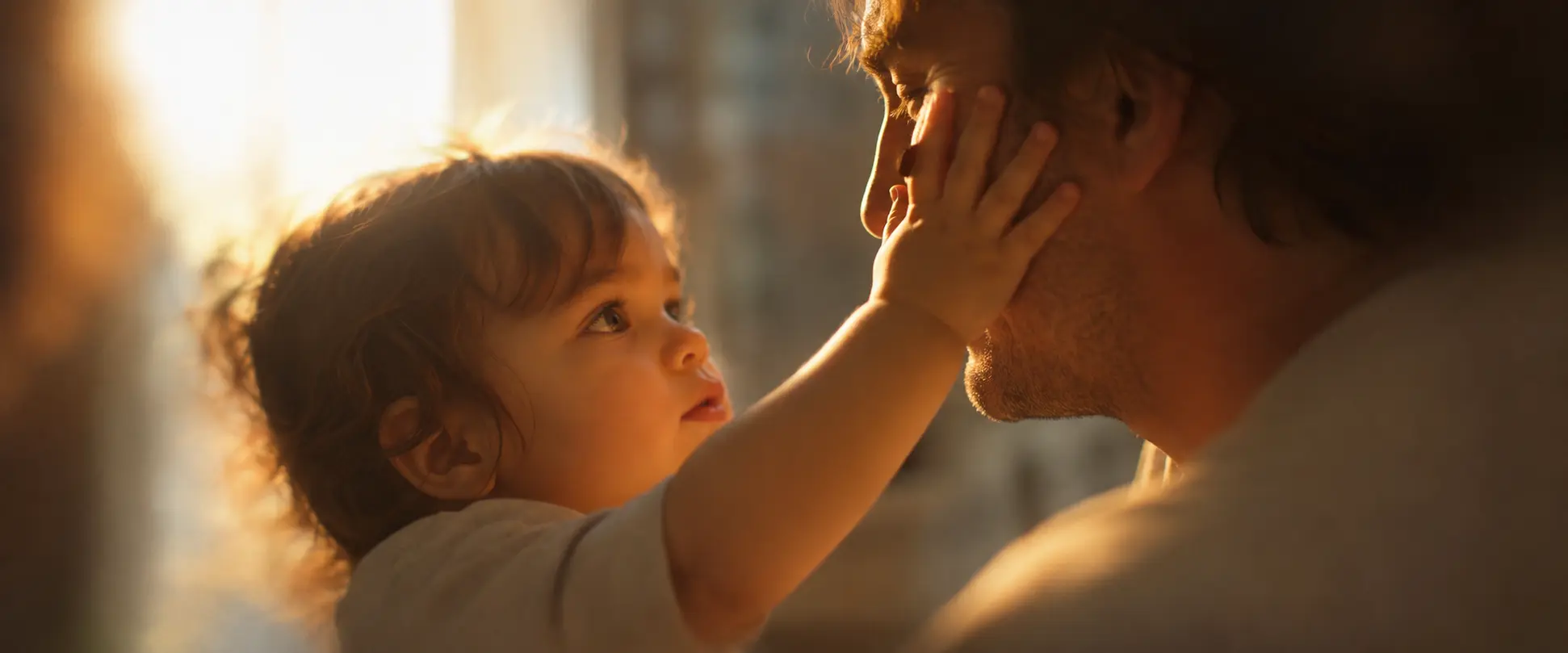
You cried, you laughed, you learned to recognise your own mother’s face — and none of it survives in your memory. Somewhere between birth and about age three or four, an entire universe of first experiences simply vanishes, leaving not even a trace behind. It happened to every single person who has ever lived, yet almost nobody stops to ask why we cant remember being babies, or how a brain that was clearly working perfectly well could forget so completely.
By the end of this article, you’ll understand what’s actually happening inside a baby’s brain during those “lost” years, why the memories aren’t just misplaced but were likely never properly saved at all, and what one surprising discovery about mice reveals about your earliest self. It’s a gap in the mind as strange as the science of déjà vu — a moment when memory quietly breaks its own rules.
The Scientific Name for a Universal Blank
Psychologists call this baby-shaped hole in your memory infantile amnesia, and it isn’t rare or unusual — it’s essentially universal. Most adults can recall almost nothing from before age three, and even memories from ages three to seven tend to be patchy, fragmented, and often quietly rewritten with each retelling, not unlike how rejection carves memories in deeper the more they’re replayed. This isn’t a flaw or a failure; it’s simply how every human brain is built.
For decades, the leading theory blamed language. Small children lack the words to organise experience into a story, so the thinking went, and a memory without a narrative has nothing to hold onto — leaving early life as vivid but wordless as the way animals dream. But newer research suggests the truth runs deeper than vocabulary, closer to how reality itself gets questioned once you look closely enough at any moment in time. The problem isn’t that toddlers can’t describe their memories. It’s that the machinery for making them may not be finished yet.
Why We Cant Remember Being Babies: A Construction Site, Not a Filing Cabinet
The real culprit appears to be the hippocampus, the brain’s memory-forming hub, which is still under heavy construction throughout early childhood. New neurons are being added there at a blistering rate during infancy, and this process may actively work against stable memory. Each fresh neuron has to wire itself into existing circuits, and in doing so it can quietly overwrite or scramble the connections that were holding an older memory in place.
Picture a library where new shelves are constantly being bolted in, sometimes right through books already on the shelves. That’s roughly what a baby’s hippocampus is doing, which is a large part of why we cant remember being babies: the storage system itself is too busy rebuilding to keep anything permanently on file.
What Mice Taught Us About Lost Memories
Here’s where it gets stranger. In a landmark study, researchers taught infant mice to fear a particular space, then used light-activated technology to peer into their brains later on. The mice behaved as though they’d completely forgotten the experience — until scientists directly reactivated the original memory cells with a beam of light. The fear instantly came flooding back.
The implication is startling: the memory hadn’t been erased at all. It appears to have simply become impossible to access through ordinary means, sitting locked away rather than deleted — filed somewhere the everyday retrieval system can no longer reach.
If the same holds true in humans, why we cant remember being babies might be less a story of loss and more a story of access. The memories could still be sitting somewhere in early neural architecture, technically intact but permanently out of reach of the adult mind trying to retrieve them.
A Beginning You Can’t Recall, But That Shaped You Anyway
So why we cant remember being babies may have less to do with losing information and more to do with a brain too busy building itself to file anything permanently. Those earliest years still mattered enormously — they wired your sense of safety, language, and attachment — you simply can’t replay the footage. Your very first years remain the one chapter of your life you lived through completely, and will never be able to read again.