
On a deserted beach in Tobago, a British radiologist bit into a sweet-smelling green fruit and felt her throat close within seconds. She had eaten the fruit of the manchineel — the most dangerous tree in the world, a title awarded by Guinness World Records. She survived. Many before her did not. And the strangest part isn’t that it nearly killed her. It’s that she’d been resting in its shade, eating its fruit, with no idea she was sitting inside a living chemical weapon.
Why the Most Dangerous Tree in the World Looks So Inviting
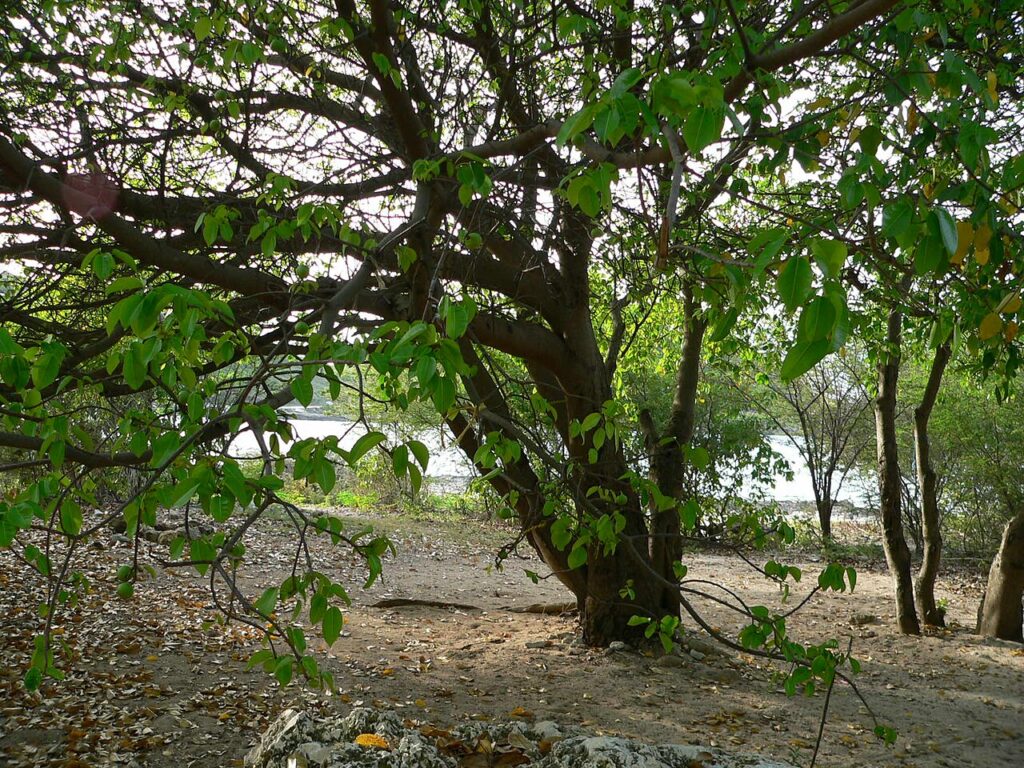
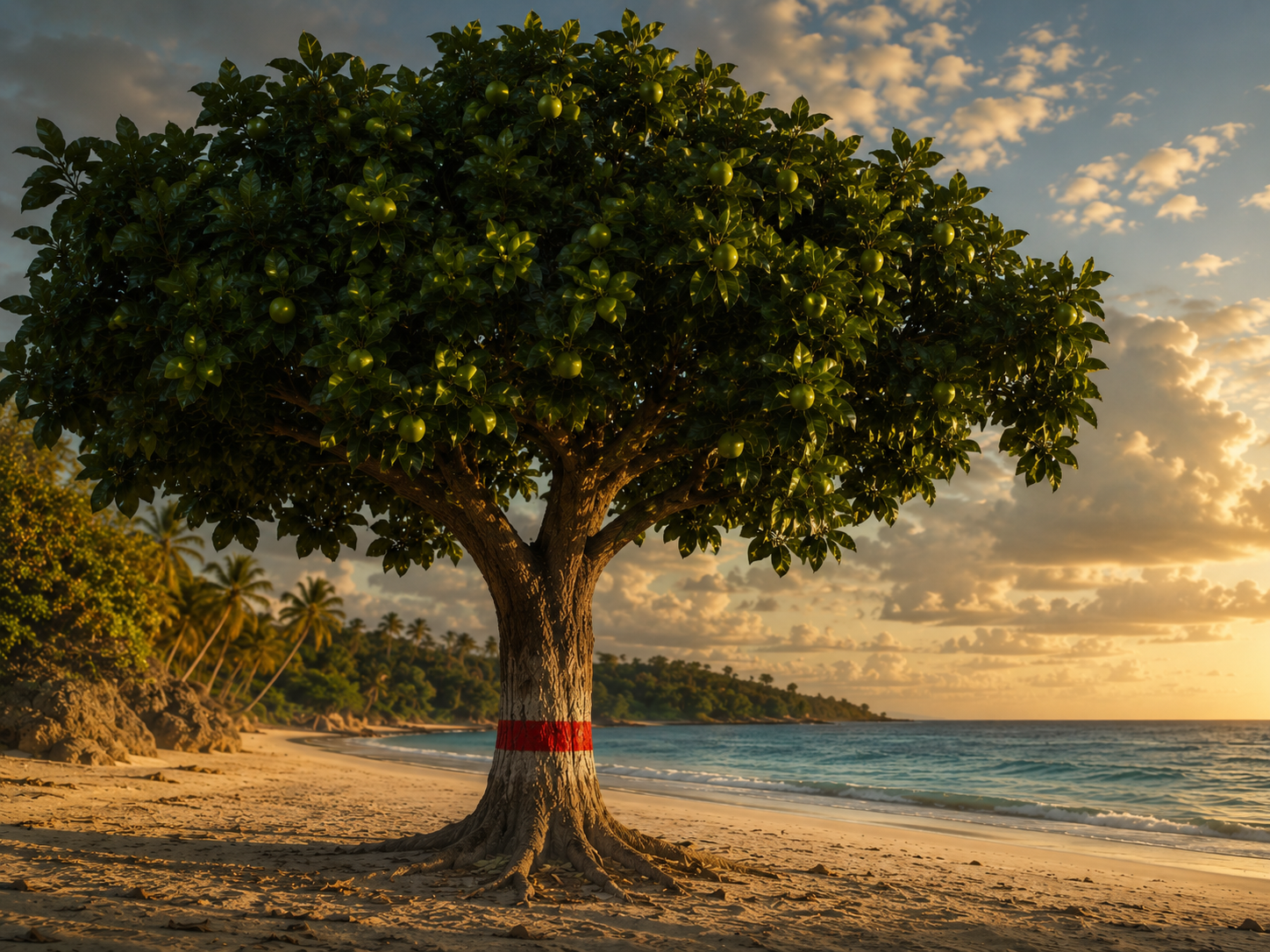
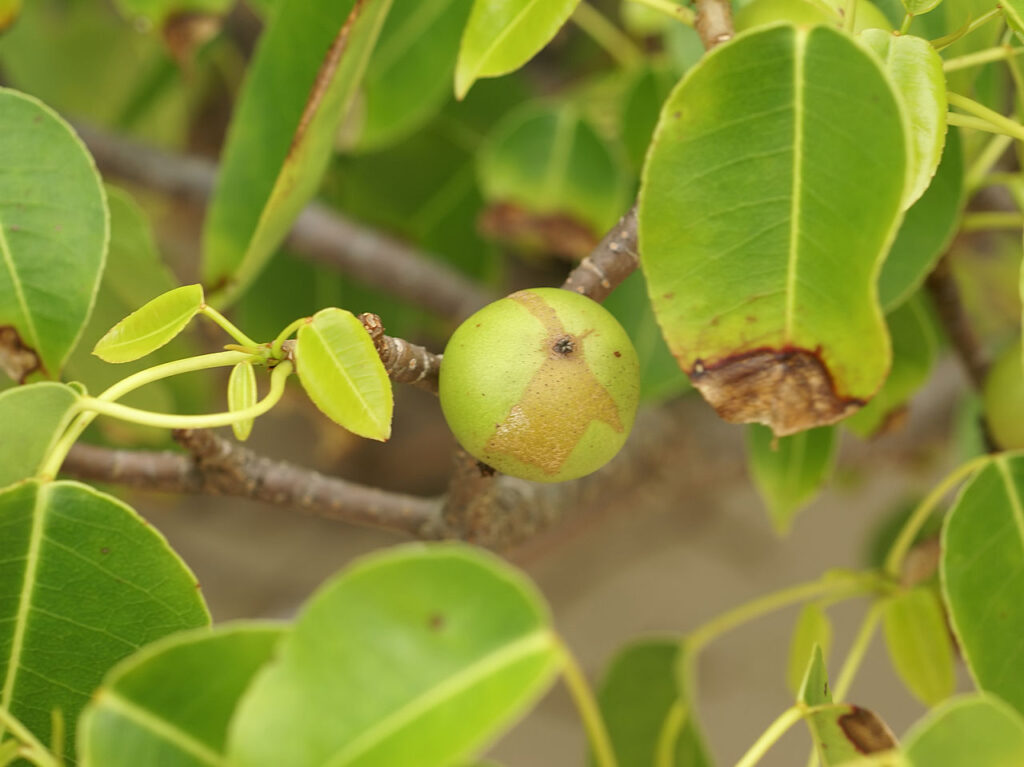
The manchineel tree (Hippomane mancinella) looks like a travel-brochure cover — glossy leaves, a wide canopy, and fruit that resembles a small green apple. It lines the coasts of South Florida, the Caribbean, and northern South America, often right where tourists lay their towels. The Spanish named it twice: manzanilla de la muerte, the “little apple of death,” and árbol de la muerte — the tree of death. Locals often paint a red ring around the trunk as a warning to anyone who doesn’t know better. Unlike trees that live for millennia, this one’s genius isn’t longevity. It’s chemistry — and it has weaponized nearly every cell in its body.
Every Part of the Tree Is a Weapon
There is no safe part of the manchineel tree. The bark, leaves, fruit, and especially the milky white sap are all loaded with toxins — University of Florida scientists warn that contact with any part may be lethal. The sap’s headline act is phorbol, a water-soluble irritant that raises burn-like blisters on contact and can cause temporary blindness. Because it dissolves so easily in water, standing under the tree during a tropical rain means the runoff itself can scald you. Shelter becomes an injury. Burn the wood, and the smoke alone can blind you. This is chemical warfare on the level of a fungus that hijacks insect brains — the manchineel just happens to be its most uncompromising practitioner.
The Genius Behind the Poison
Why would a tree go to such lengths? It isn’t evil — it’s successful. A tree can’t run or hide. Rooted for life, its only defense against everything that wants to eat it is to become deadly. Most plants settle for bitter. The manchineel went all in. Its poisonous beach apple and milky sap are the logical endpoint of an arms race that’s been running for hundreds of millions of years. It’s the same evolutionary creativity filling the planet with marvels — biologists still describe thousands of new species every single year. And it works: almost nothing touches it, except the black-spiny-tailed iguana, which co-evolved an immunity and lives happily among its branches. One creature’s death sentence is another’s private buffet — the kind of specialized survival echoed in the ocean’s hidden depths.
Why the Most Dangerous Tree in the World Is Worth Protecting
Here’s what almost nobody mentions about the tree of death: it’s a protected species, and ecologists fight to keep it alive. Its dense roots anchor shifting sand, shield beaches from erosion, and buffer fragile coastlines against storms and hurricanes. Remove it, and the shore can wash into the sea. The most dangerous tree in the world is, paradoxically, one of the things holding those tropical coastlines together.
That’s where the manchineel stops being a horror story and becomes a mirror. We call it a killer. We narrate it as a villain rooted in the sand. But that’s our projection, not its nature — it has no more malice than a thornbush or a venomous snake. The same blind, patient process that gave us oak shade and an animal that cheats death also produced a tree whose rain can burn you. Nature contains no monsters — only solutions.
The radiologist survived, and when she told the locals what she’d done, they were stunned she was still standing. The fruit still smells sweet. The shade still looks inviting. And that is the manchineel’s deepest secret: the deadliest things in nature rarely announce themselves. They look like a beach apple on a perfect morning, waiting in plain sight for someone who doesn’t yet know the rules.