
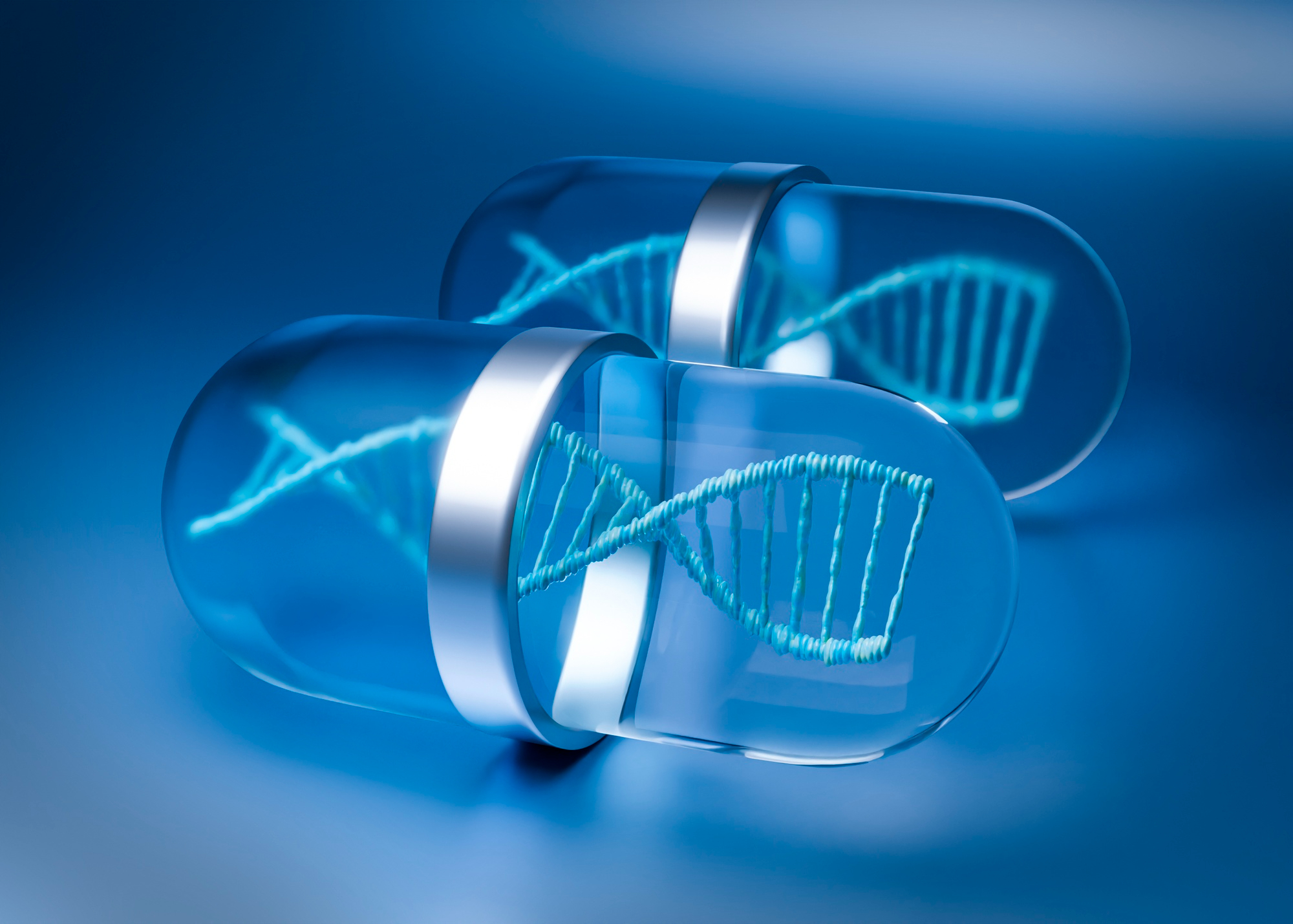
For years, gene editing was compared to using scissors on DNA—cutting, hoping the cell would repair itself correctly, and trusting that nothing went sideways. It worked, but it wasn’t always gentle. Every cut carried risk. Every repair carried uncertainty.
Now, a new generation of tools is rewriting that narrative. Scientists call it CRISPR 2.0, and its biggest promise is surprisingly simple: editing DNA without breaking both strands of it.
This isn’t distant future talk. The foundations were laid between 2016 and 2019, and today the technology is steadily moving from laboratory benches into real-world clinical trials. What once sounded impossible—fixing genetic mistakes without damaging DNA—is quietly becoming one of the most important medical breakthroughs of modern science.
What Is CRISPR and Why Is It Used?
Before diving into CRISPR 2.0, it helps to understand where the whole story began.
CRISPR stands for Clustered Regularly Interspaced Short Palindromic Repeats—a name that sounds complicated but has surprisingly humble origins. Scientists first discovered CRISPR as part of a natural defense system used by bacteria. When viruses attack bacteria, the bacteria store fragments of viral DNA in their own genome. Later, if the virus attacks again, the bacteria use those stored sequences to recognize and destroy the invader.
That natural defense system became the blueprint for one of the most powerful tools in modern biology.
In 2012, researchers Jennifer Doudna at the University of California, Berkeley, and Emmanuelle Charpentier, working in Europe at the time, demonstrated how this bacterial system could be repurposed into a programmable gene-editing tool. Their work transformed CRISPR from a biological curiosity into a precision instrument. In 2020, they were awarded the Nobel Prize in Chemistry for this discovery.
CRISPR is used because it gives scientists something biology rarely offered before—control.
With CRISPR, researchers can:
- Remove harmful genes
- Correct genetic mutations
- Add beneficial genetic instructions
- Study how diseases develop
- Engineer crops that resist drought and pests
- Explore potential cures for inherited diseases
Its impact stretches far beyond medicine. Agriculture, environmental science, and biotechnology all depend heavily on CRISPR tools today.
But even revolutionary tools have flaws. And the biggest flaw of early CRISPR was how aggressively it treated DNA.
From DNA Scissors to DNA Editors
When the original CRISPR-Cas9 system entered mainstream research in 2012, it changed biology almost overnight.
At its core, the method used an enzyme called Cas9 to cut DNA at precise locations. Scientists programmed Cas9 using guide RNA sequences, directing it to specific genes that needed modification.
That ability was extraordinary. For the first time, editing DNA felt practical instead of theoretical.
But there was a catch.
The original method depended on double-strand DNA breaks—meaning both strands of the DNA helix were cut. Once that happened, the cell rushed to repair the damage. Sometimes it repaired correctly. Other times, it introduced unintended changes.
These accidental edits became the biggest safety concern in early gene editing.
Scientists needed something more refined. Something that treated DNA with precision rather than brute force.
That desire sparked the rise of CRISPR 2.0.
The Birth of Base Editing — 2016
The first major upgrade appeared in 2016, when a team led by David Liu at Harvard University and the Broad Institute in Cambridge, Massachusetts, introduced base editing.
This moment marked a shift from cutting DNA to carefully modifying it.
Base editing allowed scientists to change individual DNA letters without breaking both strands of the molecule. Instead of slicing DNA, specialized enzymes chemically converted one base into another.
Human DNA is built from four chemical letters:
- A (Adenine)
- T (Thymine)
- C (Cytosine)
- G (Guanine)
Many inherited diseases are caused by a single incorrect letter. Base editing made it possible to correct these errors—changing C to T or A to G—without forcing cells into risky repair processes.
This single innovation opened the possibility of correcting thousands of disease-causing mutations safely and efficiently.
Still, base editing had limits. It worked beautifully for simple letter swaps, but it couldn’t rewrite larger sequences or perform complex edits.
That limitation set the stage for the next breakthrough.
Prime Editing — The True CRISPR 2.0 Revolution (2019)
In 2019, researchers led again by David Liu introduced prime editing, widely considered the defining technology behind CRISPR 2.0.
This wasn’t just an upgrade—it was a transformation.
Prime editing expanded gene editing capabilities dramatically. It allowed scientists to:
- Insert new DNA segments
- Delete unwanted DNA
- Replace faulty sequences
- Correct mutations without creating full DNA breaks
The system used a modified enzyme called Cas9 nickase, which cuts only one DNA strand instead of two. Alongside it worked a reverse transcriptase enzyme, which writes new genetic instructions into the genome.
Together, they turned CRISPR into something resembling a genetic search-and-replace tool.
Where base editing fixed spelling errors, prime editing rewrote sentences.
And once that capability existed, the boundaries of gene editing shifted.
Where These Discoveries Happened
CRISPR 2.0 did not emerge from a single lab alone. It developed across a network of world-class institutions that pushed the boundaries of genetic engineering.
Major research hubs include:
- Broad Institute, Cambridge, Massachusetts — Development of base and prime editing
- Harvard University, United States — Key engineering and biological research
- University of California, Berkeley — Foundational CRISPR discoveries
- Massachusetts General Hospital — Clinical translation and testing
- Laboratories across Europe and China — Expansion of global CRISPR research
From these centers, the technology spread rapidly. Within a few years, laboratories worldwide began testing advanced gene editing systems in living cells.
What began as academic research quickly became a global scientific movement.
Real Diseases Being Targeted Today
CRISPR 2.0 isn’t locked inside theory papers. Scientists are actively exploring how these tools can treat real human diseases.
Among the most studied targets:
Sickle Cell Disease
A disorder caused by a single mutation affecting hemoglobin structure. Base editing is being explored to correct the faulty gene responsible for abnormal red blood cells.
Beta-Thalassemia
A blood disorder that disrupts hemoglobin production. Prime editing may offer long-term correction by repairing the underlying mutation.
Inherited Blindness
Certain retinal diseases caused by single-gene mutations may be corrected through highly precise DNA editing.
Metabolic Disorders
Rare inherited diseases caused by enzyme deficiencies are among early targets for genetic correction.
Clinical trials launched between 2023 and 2025 are beginning to test the safety and effectiveness of these next-generation gene-editing strategies.
Early results remain cautious but promising.
Why Avoiding DNA Breaks Matters
Cutting DNA is not trivial.
When both strands break, the cell activates emergency repair systems designed to prevent catastrophic damage. These systems are fast but imperfect. Mistakes during repair can create unintended consequences, including:
- Unwanted mutations
- Gene disruptions
- Rare genomic rearrangements
Avoiding full DNA breaks reduces these risks significantly.
That advantage sits at the heart of CRISPR 2.0. By making controlled, targeted edits rather than violent cuts, scientists reduce the chance of unintended consequences.
In medicine, that difference can determine whether a therapy succeeds or fails.
How Old Is CRISPR 2.0?
Despite sounding futuristic, CRISPR 2.0 has already matured through years of intense development.
Here’s the actual historical timeline:
- 2012 — Classic CRISPR-Cas9 introduced
- 2016 — Base editing invented
- 2019 — Prime editing developed
- 2020–2024 — Early clinical trials begin
- 2025–2026 — Expansion into therapeutic pipelines
So depending on how the term is defined:
- Base editing: about 10 years old
- Prime editing: about 7 years old
Young by scientific standards, but already influential.
The Limits Scientists Are Still Fighting
Even powerful tools have boundaries, and CRISPR 2.0 is no exception.
One major challenge is delivery. Editing tools must reach the correct cells deep inside the body, often requiring viral carriers or engineered nanoparticles.
Another challenge is precision. Although more accurate than earlier systems, unintended edits still occur occasionally. Scientists continue refining targeting mechanisms to minimize these risks.
Cost is also a barrier. Gene-editing therapies require specialized manufacturing and testing, making them expensive and difficult to distribute widely.
These are engineering problems—not fundamental roadblocks—but solving them will take sustained effort.
What Comes After CRISPR 2.0?
Science rarely pauses once momentum builds.
Researchers are already experimenting with technologies that could represent the next phase of genetic engineering. Some of these emerging approaches focus on editing RNA rather than DNA, allowing temporary changes without permanently altering the genome.
Others explore epigenetic editing, which modifies how genes behave rather than changing their sequence.
Improved delivery systems, including lipid nanoparticles, are also being tested to make treatments safer and more accessible.
If CRISPR 1.0 gave scientists DNA scissors, and CRISPR 2.0 gave them DNA editors, the next generation may deliver something even more precise—tools capable of programming biology with unprecedented control.