
Have you ever wondered how strange and unbelievable the world really is?
Science is full of mind-blowing facts that sound fake—but are completely real.
From oceans producing oxygen to water boiling and freezing at the same time, science constantly surprises us in ways we never expect.
In this article, you’re about to discover 10 incredible science facts that will change how you see the world around you.
1. Most of Your Body Is Not Actually “You”
Right now, trillions of microorganisms are living on and inside your body. In fact, scientists estimate that your body contains roughly as many microbial cells as human cells. Your skin, gut, mouth, and even lungs are ecosystems packed with bacteria, fungi, and viruses.
Without these microbes, digestion fails, immunity weakens, and life becomes impossible. Your gut bacteria help break down food, produce vitamins like B12 and K, and even influence mood through chemical signals sent to your brain.
In other words, you’re not just a person—you’re a walking universe of microscopic life.
2. The Universe Is Mostly Stuff We Cannot See
Everything you can see—stars, planets, galaxies, and people—makes up less than 5% of the universe.
The rest is made of dark matter and dark energy, mysterious components scientists still don’t fully understand. Dark matter holds galaxies together like invisible glue, while dark energy is believed to be responsible for the accelerating expansion of the universe.
So the reality is simple but unsettling: most of existence is invisible and unknown.
3. You Can Smell Rain Before It Falls — And It Has a Name
That fresh earthy smell before rain? It’s called petrichor.
It happens when oils released by plants during dry periods mix with compounds produced by soil bacteria called actinomycetes. When raindrops hit the ground, they release tiny aerosol particles into the air—carrying that distinct scent straight into your nose.
So when you smell rain, you’re actually smelling bacteria and plant oils lifted into the sky.
4. There Are More Trees on Earth Than Stars in the Milky Way
Astronomers estimate the Milky Way galaxy contains about 100–400 billion stars.
But Earth? Scientists estimate there are around 3 trillion trees worldwide—far more than the number of stars in our home galaxy.
Sometimes the most cosmic-scale surprises are rooted right here on Earth.
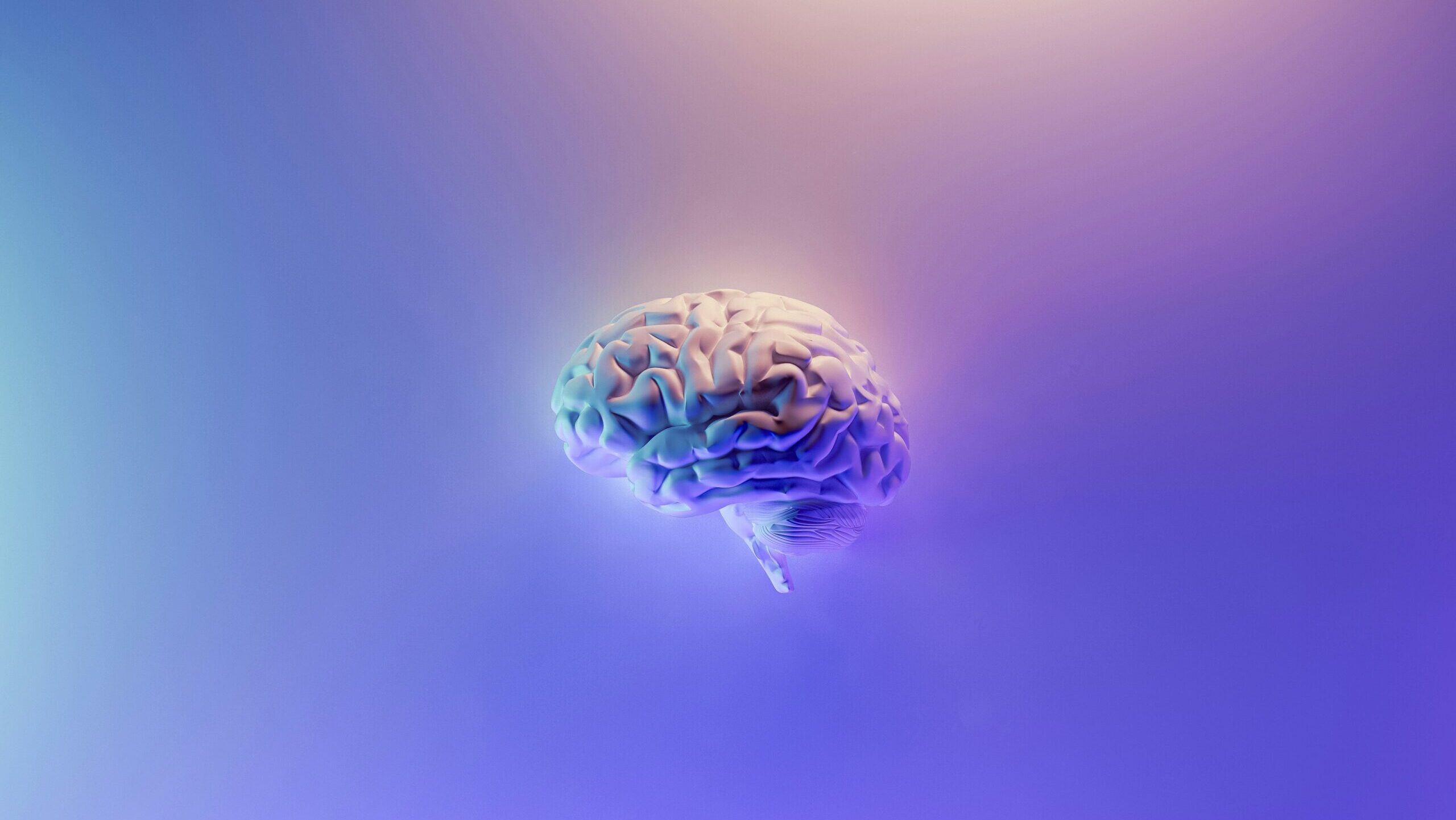
5. Your Brain Rewrites Your Memories Every Time You Recall Them
Memory isn’t playback—it’s reconstruction.
Each time you recall a memory, your brain slightly rewrites it. New details can slip in, old ones can fade, and emotions can reshape the story.
That means even your most vivid childhood memories may not be perfectly accurate. They are living, changing versions of past events—not fixed recordings.
Your memory is less like a hard drive… and more like a constantly edited draft.
6. Time Moves Faster at the Top of a Building
According to Einstein’s theory of relativity, time flows slightly faster when gravity is weaker.
Gravity is stronger closer to Earth’s surface and slightly weaker at higher altitudes. That means clocks placed at the top of tall buildings tick just a tiny bit faster than clocks on the ground floor.
The difference is microscopic—but measurable with precise atomic clocks.
So technically, if you live on the top floor… you’re aging faster than people downstairs.
7. Bananas Are Radioactive
Yes—your morning snack is slightly radioactive.
Bananas contain potassium, and a tiny fraction of that potassium exists as potassium-40, a naturally radioactive isotope.
Don’t panic though—you’d need to eat millions of bananas at once to experience harmful radiation effects. Still, it’s strange to think that everyday food quietly emits detectable radiation.
Nature has a sense of humor like that.
8. Octopuses Have Three Hearts and Blue Blood
Octopuses are basically living aliens.
They have three hearts—two pump blood to the gills, while one pumps blood to the rest of the body. Their blood is blue because it contains hemocyanin, a copper-based molecule instead of iron-based hemoglobin.
Even stranger, two of their hearts stop beating when they swim, which is why octopuses prefer crawling rather than swimming.
Evolution really went wild with these creatures.
9. There Is Enough DNA in Your Body to Reach the Sun — Hundreds of Times
If you stretched all the DNA in a single human cell, it would measure about 2 meters long.
Multiply that by the roughly 37 trillion cells in your body, and the total length becomes enormous—enough to stretch from Earth to the Sun and back hundreds of times.
All that biological information is packed into microscopic structures inside every cell.
Life isn’t just complex—it’s ridiculously compact.
10. You Are Seeing the Past Every Time You Look at the Sky
Light takes time to travel.
When you look at the Sun, you’re seeing it as it was about 8 minutes ago. Look at distant stars, and you’re seeing light that left them years, centuries, or even thousands of years earlier.
Some stars visible in the night sky may no longer exist—yet their light is still arriving.
Every glance upward is a look into history.