
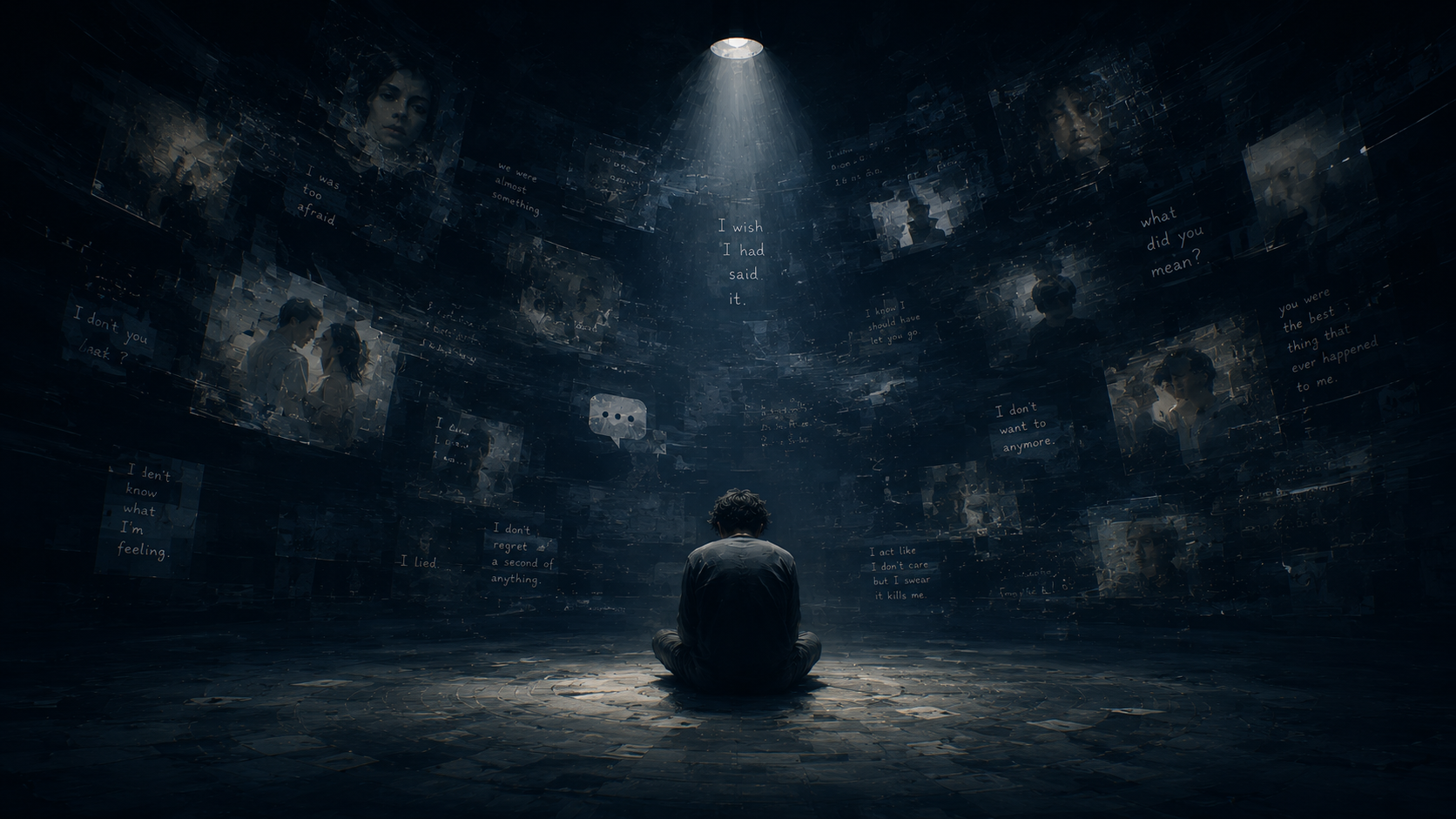
Why rejection hurts so much is one of those questions most people never think to ask — because the answer feels obvious. You got rejected. Of course it hurts. But the real question isn’t why rejection feels bad in the moment. It’s why your brain insists on replaying it at 2am, three weeks later, in perfect detail, when you were just trying to fall asleep.
That is not weakness. That is not oversensitivity. That is your brain doing exactly what it was designed to do — and understanding the mechanism behind it changes everything about how you relate to the experience.
Your Brain Treats Rejection Like Physical Pain
The most important thing neuroscience has revealed about rejection is this: your brain processes social pain and physical pain in almost the same way.
In 2003, researcher Naomi Eisenberger conducted a now-famous study in which participants played a virtual ball-tossing game called Cyberball. Midway through, the other players — controlled by a computer — stopped throwing the ball to the participant. Just that. A digital game. A small, meaningless exclusion. And the brain scans lit up in the dorsal anterior cingulate cortex and anterior insula — the same regions that activate when you experience physical injury.
Being left out of a computer game registered in the brain as something close to being hurt.
This is the real reason why rejection hurts so much in a way that goes beyond metaphor. “Heartbreak” is not poetic license. The brain is not being dramatic when it treats social rejection as a serious threat. It evolved to do exactly that — because for most of human history, being excluded from the group was not just emotionally unpleasant. It was a death sentence. No tribe meant no food, no protection, no survival. The brain that treated social rejection as a five-alarm emergency was the brain that survived.
You are carrying a piece of ancient survival hardware that cannot tell the difference between being fired and being left to die in the savanna.
Why the Replay Keeps Running
Physical pain fades. You stub your toe, it hurts, and then it stops. Social pain doesn’t follow the same rules — and part of why rejection hurts so much longer than it should is rooted in the brain’s negativity bias. Why humans are addicted to bad news connects directly to this. The same negativity bias that makes threatening information stickier than positive information also makes rejection memories more durable, more vivid, and more accessible than almost any other kind of memory.
The brain’s threat-detection system — anchored in the amygdala — flags rejection events as high-priority and sends them to long-term memory with a kind of urgency it doesn’t attach to neutral experiences. Every time you involuntarily replay a rejection, what you are actually experiencing is your threat system running a post-incident review. It is trying to extract information: What did I miss? What should I have said? How do I prevent this from happening again?
This is the same mechanism behind why we overthink everything — the brain mistakes rumination for problem-solving. It keeps looping the memory because it believes that if it just runs the scenario enough times, it will find the answer that makes you safe. It almost never does. But it keeps trying anyway.
The replay is not irrational. It is hyper-rational, in the worst possible way — a threat-response system running on hardware that hasn’t updated in 200,000 years.
The Self-Criticism That Gets Attached
Here is where rejection becomes particularly cruel — and where understanding why rejection hurts so much stops being just neuroscience and starts being personal. When the brain replays the event, it doesn’t just replay what happened. It editorialises.
The same cognitive pattern that makes embarrassing moments stick forever — the brain’s tendency to over-encode socially threatening experiences — also attaches self-critical narrative to them. You weren’t just rejected. You were rejected because you said the wrong thing, because you weren’t interesting enough, because something is fundamentally wrong with you. The brain generates these explanations not out of malice but out of its frantic need to find a pattern it can act on next time.
The problem is that the explanations are almost always wrong. Rejection is usually far more situational, far more about the other person’s circumstances, needs, or limitations, than the brain’s post-mortem ever accounts for. But the brain doesn’t have access to that data. It only has access to you — so it looks there first, and keeps looking.
Why Some People Loop Longer Than Others
Not everyone replays rejection at the same intensity. Research points to two key variables.
The first is attachment style. People with anxious attachment patterns — developed in early childhood in response to inconsistent caregiving — tend to have a threat system that is already primed to watch for signs of abandonment. For them, rejection doesn’t just register as a present-tense event. It activates a much older, deeper fear that has been waiting for confirmation. The brain’s capacity for feeling watched and monitored by others is heightened in anxious attachment, which means rejection data gets weighted even more heavily.
The second variable is self-concept clarity — how stable and well-defined your sense of self is. When someone has a fragile or uncertain self-concept, rejection doesn’t just hurt. It destabilises. It feels like evidence about who you are, rather than information about a single interaction. The more clearly defined your identity, the more easily the brain can contain rejection as a specific event rather than a global verdict.
What Actually Helps
The research suggests a few things that genuinely interrupt the loop — and they work precisely because they address the underlying biology of why rejection hurts so much in the first place.
Self-compassion — specifically, treating yourself with the same warmth you would offer a friend in the same situation — has been shown to reduce the brain’s threat response to rejection more effectively than self-distraction or positive self-talk. It works because it addresses the underlying signal: you are safe, you are not alone, this is a human experience.
Writing about the rejection in an analytical frame — not venting, but genuinely trying to understand it from the outside — also reduces replay frequency. It gives the brain the “processed” signal it is looking for without requiring it to keep running the scenario.
And understanding why coincidences feel meaningful — the brain’s tendency to find patterns and personal significance in random events — is worth applying here too. Most rejection is not a verdict. It is noise. The brain’s pattern-detection system is running on too little data and producing conclusions it has no right to draw.
Why rejection hurts so much is ultimately a story about a brain that loves you enough to treat your social safety as a matter of life and death. The problem is that it cannot tell the difference between a small, ordinary rejection and an existential threat — and it responds to both with the same disproportionate, exhausting intensity.
The replay isn’t you being weak. It’s you being human, running ancient software in a world your brain was never built for. That doesn’t make it hurt less. But it does mean the story it’s telling you — the one about what the rejection means, about you — is almost certainly wrong.